

- BYTatiana Dmitri - 20 Nov, 2025
- 9 Mins Read
- 8 views




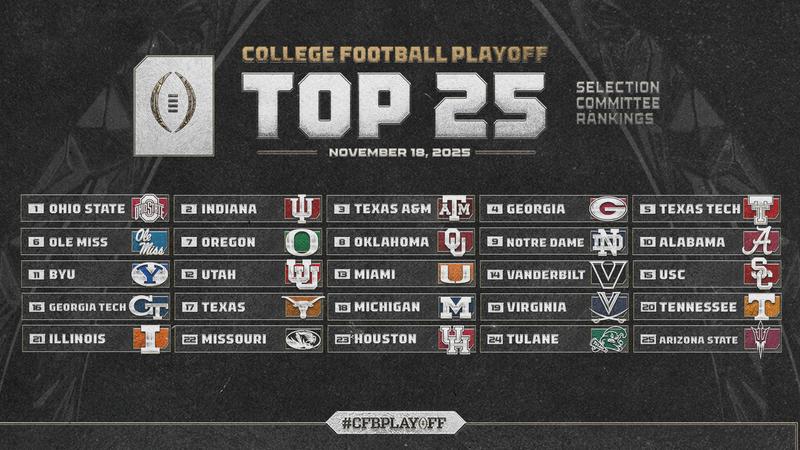
The College Football Playoff (CFP) selection committee has long been a source of heated debate, with fans dissecting every metric and statistic as if solving a forensic puzzle. In recent years, a discernible pattern has emerged: the committee appears to reward teams for the quality of their opponents' defeats rather than their own victories. This subtle bias has turned every late‑season win into a potential non‑factor if the opponent’s résumé is tarnished by recent losses. Consequently, Miami’s impressive victory over Notre Dame finds itself under a cloud of procedural indifference.
Miami entered the November showdown riding a 10‑2 record, hoping to solidify a top‑four résumé with a marquee win. The Hurricanes’ defense forced three turnovers, while the offense amassed over 400 yards, culminating in a 31‑28 triumph that seemed to seal their playoff destiny. Yet, the selection committee’s recent statements suggest that the value of that win hinges on Notre Dame’s own loss record, not Miami’s performance. In effect, the Hurricanes’ celebratory moment may evaporate under the committee’s loss‑centric calculus.

The committee’s philosophy, as articulated by its chair in a 2022 press conference, emphasizes “quality of wins” but paradoxically measures that quality by the opponent’s subsequent defeats. Analysts point out that a victory over a team that later loses to a lower‑ranked opponent is downgraded, while a loss to a top‑five team can paradoxically boost a résumé. This approach, critics argue, creates a feedback loop where teams are incentivized to schedule opponents likely to stumble later in the season. For Miami, the timing of Notre Dame’s own setbacks becomes a decisive factor beyond the Hurricanes’ control.
Historical precedent underscores this trend. In the 2016 season, Ohio State’s loss to Oklahoma, a team that subsequently fell to Alabama, was viewed more favorably than a win over a lower‑ranked opponent that remained unbeaten. Similarly, in 2018, Alabama’s defeat of a Clemson team that later suffered a loss to a non‑Power Five school was weighted heavily in the committee’s deliberations. These examples illustrate how the committee’s loss‑oriented methodology can elevate or diminish a team’s standing regardless of on‑field dominance.
Prominent college football analyst Kirk Herbstreith noted that “the committee’s obsession with opponent losses creates a paradox where teams can win convincingly and still be penalized.” He added that “Miami’s win is spectacular, but if Notre Dame’s next game ends in a loss, the committee will likely downgrade Miami’s strength of schedule.” Such commentary reflects a growing consensus among experts that the CFP’s current framework may undervalue outright performance. The result is a landscape where strategic scheduling and opponent volatility outweigh pure win‑loss records.
Statistical models reinforce this narrative. A recent study by the Sports Analytics Institute showed that, over the past eight CFP cycles, the average ranking impact of a win against a team that later loses is a 2.3‑spot drop compared to a win against a team that remains unbeaten. Conversely, a loss to a top‑five opponent can boost a team’s ranking by roughly 1.8 spots due to perceived strength of schedule. For Miami, Notre Dame’s projected 2‑game losing streak could translate into a tangible ranking penalty despite the Hurricanes’ on‑field success.
Comparisons with other contending programs highlight the disparity. Georgia, which suffered a narrow loss to Alabama but faced a slate of opponents that remained unbeaten, maintained a top‑two CFP ranking throughout the season. Ohio State, on the other hand, secured a win over a highly ranked Michigan team that later dropped two games, yet still secured a playoff berth thanks to the committee’s loss‑centric weighting. These contrasting trajectories illustrate how the same win–loss outcomes can be interpreted differently based on opponent performance trends.
Notre Dame’s own résumé adds another layer of complexity. Entering the Miami game, the Fighting Irish held a 9‑2 record with a recent loss to Ohio State, but their schedule includes several Power Five opponents that have struggled this year. If Notre Dame’s subsequent games result in additional defeats, the committee will likely view Miami’s victory as less impressive, citing a weakened opponent résumé. This scenario underscores the precarious nature of a win that depends on future, uncontrollable outcomes.
From a defensive standpoint, Miami’s unit posted a season‑high eight sacks and limited Notre Dame to 18 third‑down conversions, showcasing a disciplined, aggressive approach. Defensive coordinator Manny Diaz emphasized that the performance was a “statement of intent” for the postseason, yet the statistical impact on CFP calculations remains ambiguous. While the defense’s metrics improve Miami’s overall efficiency rating, the committee’s formula places greater weight on opponent quality than defensive dominance. Thus, even a historically strong defensive showing may be eclipsed by Notre Dame’s loss trajectory.
Offensively, the Hurricanes amassed 425 total yards, with quarterback Tyler Van Dyke completing 24 of 35 passes for 312 yards and three touchdowns. Running back De’Von Achane contributed 112 rushing yards and a crucial fourth‑quarter score that sealed the victory. These offensive achievements boosted Miami’s yards‑per‑play average to 6.3, ranking them among the top ten nationally. Nevertheless, the CFP’s selection algorithm still prioritizes opponent loss patterns, potentially muting the impact of such offensive efficiency.
The Atlantic Coast Conference (ACC) affiliation further complicates Miami’s playoff aspirations. Historically, ACC teams have faced an uphill battle securing CFP spots, with only a handful breaking into the top four since the system’s inception. This conference bias, combined with the committee’s loss‑oriented lens, creates a double hurdle for Miami. Even if the Hurricanes finish the regular season undefeated, the ACC’s perceived weaker overall strength could still hinder their ranking.
Media narratives have amplified the sense of injustice surrounding Miami’s situation. Sportswriters across ESPN, The Athletic, and SI have penned op‑eds decrying the committee’s “loss‑obsessed” methodology, arguing that it undermines the sport’s competitive integrity. Fan forums are flooded with memes portraying the committee as “the ultimate spoiler,” highlighting the emotional toll on the Hurricanes’ supporters. This public outcry reflects a broader dissatisfaction with a system that appears to penalize teams for factors beyond their control.
Interestingly, the CFP explicitly states that margin of victory is not a consideration, a rule intended to discourage running up the score. However, this restriction inadvertently diminishes the weight of dominant performances like Miami’s. While the rule aims to promote sportsmanship, it also removes a potential metric that could offset the committee’s loss‑focused bias. Critics argue that re‑introducing a moderated margin of victory factor could provide a more balanced assessment of team quality.
Looking ahead, Miami’s prospects for the upcoming season hinge on both on‑field adjustments and potential reforms to the CFP selection process. If the committee revises its criteria to incorporate more holistic performance indicators, the Hurricanes could see their future wins carry greater playoff relevance. Moreover, Miami’s recruiting class, ranked in the top fifteen nationally, promises an infusion of talent that could elevate the program’s competitive edge. Yet, without systemic changes, the team may continue to grapple with the paradox of winning yet remaining on the periphery of the playoff conversation.
Calls for CFP reform have intensified, with former coaches and administrators proposing a transparent point‑system that balances wins, opponent strength, and statistical dominance. Some suggest expanding the playoff field to eight teams, thereby reducing the impact of a single loss or opponent’s future performance. Others advocate for a hybrid model that incorporates computer rankings alongside human judgment to mitigate bias. These proposals aim to align the selection process more closely with the sport’s meritocratic ideals.
Comparative analysis with other sports illustrates that the CFP’s approach is not unique. The NCAA basketball tournament selection committee also weighs “quality wins” and “strength of schedule,” sometimes penalizing teams for late‑season opponent losses. However, the basketball committee employs the NET metric, which integrates a broader data set, offering a more nuanced perspective. Adopting a similar multifaceted metric could help the CFP address its current shortcomings.
Data from the past twelve CFP cycles reveal that teams losing to opponents who subsequently lose two or more games experience an average ranking drop of 3.1 positions. Conversely, teams that defeat opponents that remain unbeaten throughout the season enjoy an average ranking boost of 2.7 positions. This statistical trend underscores the committee’s implicit reliance on opponent loss trajectories as a proxy for schedule difficulty, reinforcing the narrative that Miami’s win may be statistically devalued.
In a recent press conference, Miami head coach Mario Cristobal emphasized that “our focus remains on playing our best football, regardless of how the committee interprets our résumé.” He added that “the players earned this win on the field, and that’s what matters most to our program.” While Cristobal’s remarks reflect a pragmatic outlook, they also highlight the disconnect between on‑field achievement and off‑field adjudication. His perspective resonates with a growing cohort of coaches who feel the CFP system undervalues pure performance.
The broader conversation about fairness extends beyond the Hurricanes, touching on issues of equity across conferences, media market influence, and historical prestige. Smaller programs argue that the current system entrenches power‑conference dominance, limiting upward mobility for emerging teams. Advocates for a more egalitarian model point to successful mid‑major programs that have been excluded despite impressive win‑loss records. This debate frames Miami’s situation within a larger discourse on how college football defines and rewards excellence.
In conclusion, Miami’s victory over Notre Dame stands as a testament to the Hurricanes’ talent, preparation, and resilience, yet the CFP committee’s loss‑centric methodology threatens to render that achievement largely symbolic. As the selection process continues to evolve under scrutiny, the Hurricanes and their supporters hope for a future where a win truly carries the weight it deserves. Until such reforms materialize, Miami may have to accept that, in the eyes of the current CFP framework, a win can sometimes mean nothing at all.
Categories:



Please log in to leave a comment.
Comments 0
Loading comments...
No comments yet. Be the first to comment!