

- BYAlina Harold - 20 Nov, 2025
- 10 Mins Read
- 16 views



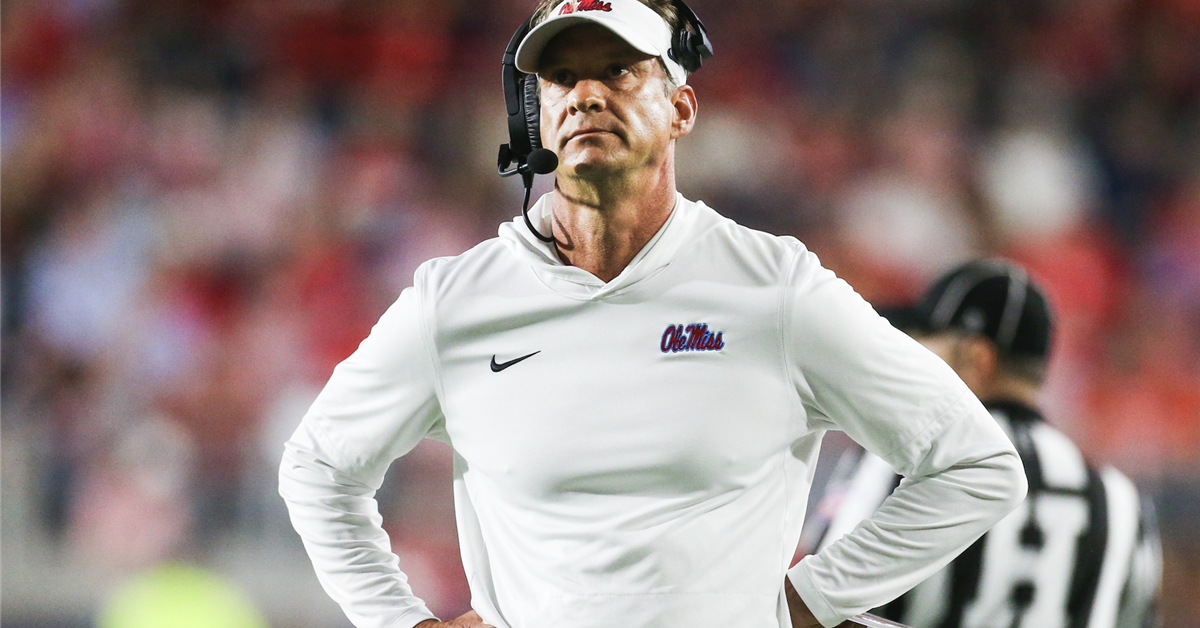
The annual winter ritual known as the coaching carousel spun into overdrive Monday when Virginia Tech athletic director Shane Beamer ended weeks of speculation by luring Penn State coach James Franklin back to his native Commonwealth, a move that simultaneously filled the Hokies’ vacancy and created yet another opening in a Power Four landscape already littered with them. Franklin’s decision to return home—he grew up 90 minutes from Blacksburg and began his career as a graduate assistant under Frank Beamer—was the first domino to fall among what is shaping up to be the most volatile hiring cycle in modern college-football history, leaving eight heavyweight programs without permanent leadership less than three weeks before the early signing period and the transfer-portal window reopening.
Those eight vacancies—LSU, Florida, Auburn, Penn State, Arkansas, UCLA, Oklahoma State and Stanford—represent a combined 14 claimed national championships, 105 conference titles, 1,750 all-time wins and, perhaps most importantly in 2024, more than $1.2 billion in annual athletic-department revenue. The stakes transcend mere wins and losses; university presidents, regents and deep-pocketed collectives are wagering nine-figure commitments on the belief that the right coach can vault them into the 12-team College Football Playoff, keep their rosters intact in the portal era, and energize donor bases whose annual giving increasingly determines whether a program can afford the $20-to-$30 million buyouts that have become routine.
Inside athletic offices from Baton Rouge to Palo Alto, search firms are burning midnight oil, booster WhatsApp groups are imploding with rumor, and agents are leveraging every breadcrumb of information into leverage for extensions elsewhere. 247Sports canvassed its network of beat writers, recruiting analysts and industry sources to compile the most comprehensive snapshot of where each search stands, which candidates are rising or fading, and what external forces—conference realignment, name-image-and-likeness budgets, even the looming 2025 expiration of the CFP media rights—are quietly influencing decisions that will reverberate for a decade.
LSU’s pursuit began the moment athletic director Scott Woodward parted ways with Brian Kelly after a 9-3 regular season that failed to meet the program’s self-declared “championship standard.” Woodward, who has developed a reputation for landing whale hires after luring Kelly from Notre Dame and basketball coach Kim Mulkey from Baylor, has targeted a tier of candidates who have either won national titles or come tantalizingly close. Florida State’s Mike Norvell initially topped the board after guiding the Seminoles to back-to-back ACC titles, but Seminoles administrators moved swiftly to extend Norvell through 2031 with a total package that could reach $100 million, forcing Woodward to pivot toward a group that includes Clemson’s Dabo Swinney, Oregon’s Dan Lanning and, in a dark-horse twist, former Tigers coach and current adviser Les Miles, whose 2019 national-championship run remains fresh in Baton Rouge memory.
Florida’s situation is complicated by the Gators’ place in the nation’s most competitive recruiting zip code and a collective budget, Gator Guard, that sources say has already pledged $180 million over the next five years for roster retention. Athletic director Scott Stricklin is under pressure from boosters to hire an offensive mind capable of countering Georgia’s defensive juggernaut and Texas A&M’s resource advantage in the SEC arms race. Early momentum centered on Louisville’s Jeff Brohm, who has averaged 31 points per game since returning to his alma mater, but internal polling of UF’s biggest donors showed a preference for a defensive counterweight, catapulting Tennessee’s Tim Banks and even recently fired Patriots coach Bill Belichick—who owns a Gainesville home—into the conversation. Stricklin has scheduled second interviews for both Brohm and Banks this week while keeping an emergency line open to Lanning should Oregon’s season end in the Pac-12 title game.
Auburn’s search is being run by new athletic director John Cohen, who arrived from Mississippi State with a reputation for meticulous due diligence and a willingness to spend big, having signed football coach Mike Leach to a $7-million annual deal in Starkville. Cohen’s first call after officially accepting the Auburn post last Friday was to Liberty’s Jamey Chadwell, whose 11-win Flames employ an up-tempo option attack that averaged 37 points per game. Chadwell’s offensive philosophy meshes with Auburn’s desire to rebrand itself as a modern, quarterback-centric program after years of pro-style stagnation under Hugh Freeze. Yet Cohen is also intrigued by TCU’s Sonny Dykes, whose 2022 national-runner-up Horned Frogs proved that a Big 12 brand of wide-open football can translate to SEC stadiums, and by Alabama offensive coordinator Nick Sheridan, whose recruiting ties to the Southeast would blunt the inroads Georgia and Alabama have made into Alabama’s traditional backyard.
Penn State’s vacancy, created by Franklin’s departure, presents perhaps the most fascinating conundrum of the cycle. Athletic director Patrick Kraft must balance a fan base that craves national relevance with a geography that no longer produces the volume of elite high-school talent it did when Joe Paterno roamed the sideline. Early targets include Iowa State’s Matt Campbell, whose culture-building acumen turned the Cyclones into a perennial top-25 program, and Kansas State’s Chris Klieman, whose 42-21 record in Manhattan includes four seasons of nine or more wins. Both coaches have Big Ten experience—Campbell as a former Toledo assistant, Klieman as a former Northern Iowa coach who annually faced Iowa and Minnesota—and both have demonstrated an ability to develop lightly recruited prospects into NFL Draft picks, a prerequisite in Happy Valley’s new market reality.
Arkansas finds itself in the unusual position of possessing both a top-10 recruiting class committed for 2025 and a collective, the Razorback Foundation, whose coffers were depleted by a $17 million buyout of Sam Pittman and a $12 million buyout of basketball coach Eric Musselman last year. Athletic director Hunter Yurachek has been candid with boosters that the next football hire must be a “program elevator” willing to accept a below-market salary in Year 1 with aggressive escalators tied to SEC wins and CFP appearances. That framework has narrowed the field to coaches who view Arkansas as a stepping-stone rather than a destination, most notably Memphis’ Ryan Silverfield, whose 24-14 record over the last three seasons includes a 21-point win over a top-10 Penn State squad in the 2023 Liberty Bowl, and South Alabama’s Kane Wommack, whose 10-win Jaguars upset Oklahoma State in the 2024 opener.
UCLA’s vacancy is the first in the Big Ten era for the Bruins, who will begin play in the conference next season and who must now compete with Ohio State, Michigan and Oregon for both recruits and television eyeballs. Athletic director Martin Jarmond has prioritized offensive identity and West-Coast recruiting ties, leading to early interest in Washington’s Jedd Fisch, whose Huskies averaged 490 yards per game en route to the 2023 national-title game, and to USC’s Kliff Kingsbury, whose Air Raid principles would provide an instant contrast to the physical pro-style attacks of traditional Big Ten powers. Kingsbury, whose NFL head-coaching stint with the Cardinals ended after the 2022 season, has privately expressed interest in returning to the college game where his quarterback-development track record—Patrick Mahomes, Baker Mayfield, Kyler Murray—translates into immediate portal appeal.
Oklahoma State’s search is being shepherded by mega-booster T. Boone Pickens’s successor, Mike Holder, who has pledged to “resource this program at a level commensurate with our ambition,” a vow that opens the door to buyouts north of $20 million. The Cowboys have targeted coaches who can maintain Mike Gundy’s bedrock of consistency—17 consecutive bowl appearances—while injecting the schematic innovation necessary to compete with Texas and Oklahoma in the expanded SEC. Early leaders include Tulane’s Jon Sumrall, whose 23-4 record over two seasons in New Orleans includes a Cotton Bowl victory, and UTSA’s Jeff Traylor, whose 43-10 run with the Roadrunners features back-to-back conference titles and a reputation as one of the sport’s most relentless recruiters.
Stanford’s opening is the most idiosyncratic of the cycle, constrained by admissions standards that require football signees to meet the same academic index as the general student body, a endowment-driven financial model that limits collective spending, and a location that no longer sits atop the Pac-12’s recruiting footprint now that the conference has dissolved. Athletic director Bernard Muir has prioritized coaches who have thrived in academically rigorous environments, leading to early conversations with Northwestern’s David Braun, whose 8-4 debut season in Evanville included a victory over Penn State in Dublin, and with Cal’s Justin Wilcox, whose Berkeley program shares Stanford’s academic profile and whose defense has ranked in the national top 25 in scoring for three straight seasons. Both coaches have indicated a willingness to accept a compensation structure weighted toward deferred academic bonuses rather than the upfront guarantees that have become standard elsewhere.
Complicating every search is the calendar. The early signing period opens December 18, and the transfer-portal window follows on December 21, meaning any hire made after December 10 will be scrambling to preserve 2025 classes while simultaneously poaching immediate-impact veterans from rival rosters. Search firms have responded by building “shadow staffs” of would-be assistants—analysts, strength coaches, even social-media directors—who can be announced within hours of a head coach’s introduction, a practice that has become so prevalent that the NCAA is expected to legislate against it next spring.
Buyouts, once viewed as prohibitive, have become line items in budgets that now exceed $150 million annually at the sport’s wealthiest programs. LSU’s obligation to Brian Kelly will cost $27 million, Auburn’s to Hugh Freeze $21 million, Penn State’s to Franklin $12 million, and Arkansas’s to Pittman $17 million, yet those figures are offset by multimedia rights deals that guarantee each school between $65 and $85 million per year through the remainder of the decade. Collectives, meanwhile, have pledged an additional $400 million nationwide for roster management in 2025, according to data compiled by 247Sports, a figure that exceeds the entire athletic budget of 17 FBS programs.
The ripple effects will be felt for years. A coaching hire is no longer merely a football decision; it is a strategic investment in enrollment management, donor cultivation, conference realignment leverage, and brand positioning for the next round of media-rights negotiations. The schools that navigate this cycle successfully—Florida in 1990 with Steve Spurrier, Alabama in 2007 with Nick Saban, Georgia in 2016 with Kirby Smart—have parlayed one transcendent hire into decades of relevance. Those that misfire—Tennessee in 2010 with Derek Dooley, Texas in 2014 with Charlie Strong, Florida State in 2018 with Willie Taggart—have required a decade to recover, if they recover at all.
As athletic directors board planes for clandestine meetings in airport hangars and agents flood their inboxes with leverage plays, the only certainty is that the landscape will shift again before the ink dries on the next contract. The next 72 hours could determine which programs spend the next decade chasing playoff berths and which spend it explaining to donors why they are still rebuilding. In the zero-sum economy of college football, the only thing more expensive than hiring the right coach is hiring the wrong one twice.
Categories:


Please log in to leave a comment.
Comments 0
Loading comments...
No comments yet. Be the first to comment!