

- BYAdriana Alejandro - 20 Nov, 2025
- 9 Mins Read
- 4 views



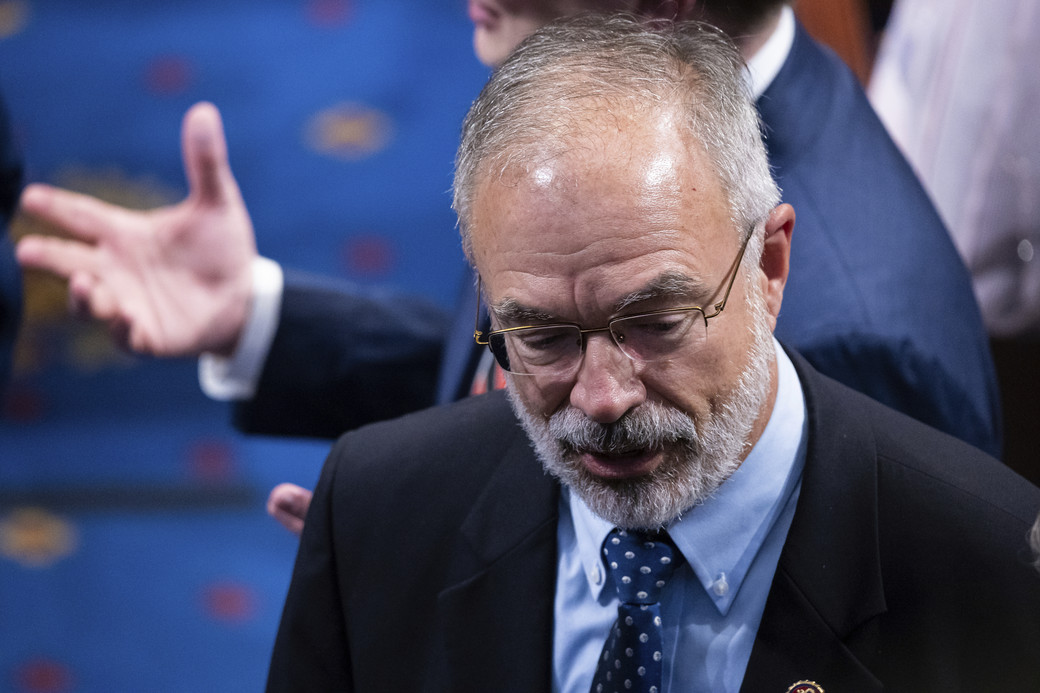
A dramatic rift has emerged within Republican ranks as Senate Republican Leader John Thune flatly rejected House Speaker Mike Johnson's eleventh-hour demand to overhaul bipartisan legislation aimed at disclosing files related to the Jeffrey Epstein scandal. The legislation, which has garnered widespread bipartisan support, seeks to compel the federal government to release thousands of pages of documents related to the disgraced financier's extensive network of powerful associates and alleged co-conspirators. Thune's refusal marks a significant setback for Johnson, who had hoped to implement sweeping changes to the bill's disclosure mechanisms and privacy protections before it reaches the Senate floor for a final vote.
The proposed bill, formally known as the Epstein Files Transparency Act, emerged from months of mounting public pressure following the controversial 2022 death of Epstein's longtime confidante Ghislaine Maxwell, who was convicted on sex trafficking charges. The legislation would mandate the release of previously classified FBI investigation files, federal prosecutor communications, and sealed court documents that many believe could expose the extent of Epstein's influence over politicians, business leaders, and celebrities across multiple decades. Supporters argue that full disclosure is essential for justice and accountability, while critics worry about privacy violations and potential harm to innocent individuals named in the documents.
Johnson's proposed modifications, delivered to Thune's office just days before the scheduled Senate vote, included provisions that would have significantly limited the scope of document release and imposed new restrictions on how the information could be accessed by the public. The House Speaker reportedly wanted to create a special congressional committee with veto power over any document release, require redaction of names of individuals not formally charged with crimes, and establish a complex bureaucratic process that could delay disclosure for years. These demands represented a stark departure from the original bipartisan compromise that had been carefully negotiated over several months.
Thune's decision to reject Johnson's demands came after extensive consultation with Senate GOP lawyers, who conducted a thorough review of the legislation and determined that it was legally sound and sufficient as written. The Senate Republican leader emphasized that the bill already contained robust privacy protections, including provisions for redacting sensitive personal information and protecting ongoing investigations. In a statement to reporters, Thune stressed that reopening negotiations at this late stage would likely doom the legislation entirely, given the fragile coalition of supporters and the limited time remaining in the legislative session.
The tension between Thune and Johnson illustrates the complex political dynamics surrounding the Epstein case, which has bedeviled lawmakers for years due to its explosive potential to damage careers and reputations across the political spectrum. Some Republicans privately worry that full disclosure could implicate prominent party donors and allies, while Democrats face similar concerns about their own supporters. The legislation has thus become a rare instance of genuine bipartisanship, with members of both parties setting aside partisan considerations in favor of transparency and accountability.
Legal experts have weighed in heavily on the controversy, with many praising Thune's stance as a principled defense of government transparency. Professor Elizabeth Warren of Harvard Law School, who has written extensively on government disclosure laws, argues that Johnson's proposed changes would have essentially gutted the bill's effectiveness. The modifications would have created so many loopholes and exceptions that federal agencies could easily avoid disclosure by claiming various exemptions, effectively maintaining the status quo of secrecy that has prevailed since Epstein's suspicious death in a federal prison cell.
The Epstein Files Transparency Act has its roots in a similar but failed effort from 2021, when initial attempts to force document disclosure stalled amid bureaucratic resistance and political infighting. That earlier effort, led by Senators Marsha Blackburn and Kirsten Gillibrand, gained modest traction but ultimately collapsed when Senate leadership refused to bring it to a floor vote. The current legislation represents a more comprehensive and aggressive approach, learning from the failures of its predecessor while incorporating new legal strategies developed in consultation with transparency advocates and constitutional scholars.
Public opinion polls consistently show overwhelming support for full disclosure of Epstein-related documents, with recent surveys indicating that over 78% of Americans believe the government should release all files related to the case. This public sentiment has translated into significant grassroots pressure on lawmakers, with hundreds of thousands of constituents contacting their representatives to demand action. The issue has become particularly potent on social media, where hashtags like #ReleaseTheFiles and #EpsteinCoverup have trended repeatedly, keeping the story in the public consciousness despite sporadic media coverage.
The bill's path through Congress has been anything but smooth, facing opposition from multiple powerful interests who fear the potential fallout from full disclosure. Some national security officials have argued that certain documents contain sensitive intelligence information that could compromise ongoing operations if released. Others worry about the precedent set by forcing government disclosure of investigation files, fearing it could undermine future law enforcement efforts or discourage cooperation from confidential informants who expect their identities to remain secret.
Johnson's motivations for pushing last-minute changes remain unclear, though some speculate he may be responding to pressure from influential donors or party insiders who fear being implicated in the documents. The House Speaker has denied any improper influence, insisting that his concerns are purely procedural and focused on protecting innocent individuals who might be unfairly associated with Epstein's crimes. However, his timing and the scope of the proposed changes have raised eyebrows among transparency advocates, who note that similar concerns could have been raised during the extensive committee hearings and markup sessions where the bill was refined.
The legislation's supporters have framed it as a crucial test of Congress's commitment to oversight and accountability, arguing that failure to pass the bill would essentially endorse a system where powerful individuals can avoid scrutiny through political connections. They point to Epstein's own history of evading serious consequences for his crimes as evidence of a two-tiered justice system that protects the wealthy and well-connected while harshly punishing ordinary citizens. The bill's passage, they argue, would represent a small but meaningful step toward restoring public trust in institutions that have been severely damaged by high-profile failures of accountability.
Opposition to the bill has also come from unexpected quarters, including some victims' advocacy groups who worry that public release of documents could retraumatize survivors or discourage future victims from coming forward. These concerns have led to heated debates within the advocacy community, with some survivors strongly supporting disclosure as necessary for justice while others fear the consequences of public exposure. The bill attempts to address these concerns through provisions that allow victims to request redaction of their identities and establish support services for those affected by document release.
The technical and logistical challenges of implementing the legislation are substantial, requiring coordination between multiple federal agencies including the FBI, Department of Justice, and various inspector general offices. The bill mandates creation of a centralized database for released documents, development of redaction protocols, and establishment of review processes that balance transparency with legitimate security concerns. Federal agencies have estimated that full compliance could require millions of dollars in additional funding and thousands of staff hours to properly review and process the estimated 100,000 pages of documents potentially covered by the act.
International implications of the Epstein disclosure have also complicated the bill's path through Congress, as many documents likely contain information about foreign nationals and international investigations. Several foreign governments have reportedly expressed concern about potential diplomatic fallout from document release, particularly if high-ranking officials from allied countries are implicated. The State Department has quietly lobbied for modifications that would allow greater coordination with foreign governments before documents are released, though these efforts have largely failed to gain traction in Congress.
The bill's supporters have rejected these international concerns, arguing that transparency should not be sacrificed to protect foreign officials who may have been complicit in Epstein's crimes. They note that several European countries have already conducted their own investigations into Epstein's activities and have been more forthcoming with information than the United States government. Some have suggested that U.S. disclosure could encourage other countries to release their own files, potentially creating a global reckoning with the networks of powerful individuals who enabled Epstein's predation.
Looking ahead, Thune's rejection of Johnson's demands likely clears the path for Senate passage of the bill, assuming supporters can maintain their fragile coalition in the face of potential last-minute opposition. The legislation would then return to the House for final approval, where Johnson would face the politically difficult choice of either allowing a vote on the original bill or risking accusations of obstruction. House Democrats have already indicated they would force a vote through discharge petition if necessary, potentially bypassing Johnson's control of the calendar.
The long-term implications of the Epstein Files Transparency Act extend far beyond this single case, potentially establishing new precedents for government disclosure and accountability. Legal scholars have noted that successful passage could encourage similar legislation targeting other high-profile cases where government transparency has been lacking, from the JFK assassination files to more recent investigations into political corruption. The bill's framework could become a template for future transparency efforts, fundamentally altering the relationship between government agencies and public oversight.
Public reaction to Thune's decision has been largely positive, with transparency advocates praising his willingness to stand up to pressure from within his own party. Social media has been flooded with messages of support for the Senate GOP leader, with many expressing surprise that a Republican senator would take such a strong stance in favor of disclosure. This reaction reflects the unusual political dynamics of the Epstein case, which has created strange bedfellows across traditional partisan lines and challenged conventional assumptions about political motivations.
The coming weeks will be crucial for determining whether the Epstein Files Transparency Act can maintain its momentum and become law, or whether opponents will find new ways to delay or derail the effort. With time running out in the current legislative session and midterm elections approaching, supporters are racing against both the calendar and potential shifts in political winds that could alter the bill's prospects. For now, Thune's decisive rejection of Johnson's demands represents a significant victory for transparency advocates and a major step toward what could be one of the most significant government document releases in American history.
Categories:




Please log in to leave a comment.
Comments 0
Loading comments...
No comments yet. Be the first to comment!