

- BYTatiana Dmitri - 20 Nov, 2025
- 9 Mins Read
- 7 views



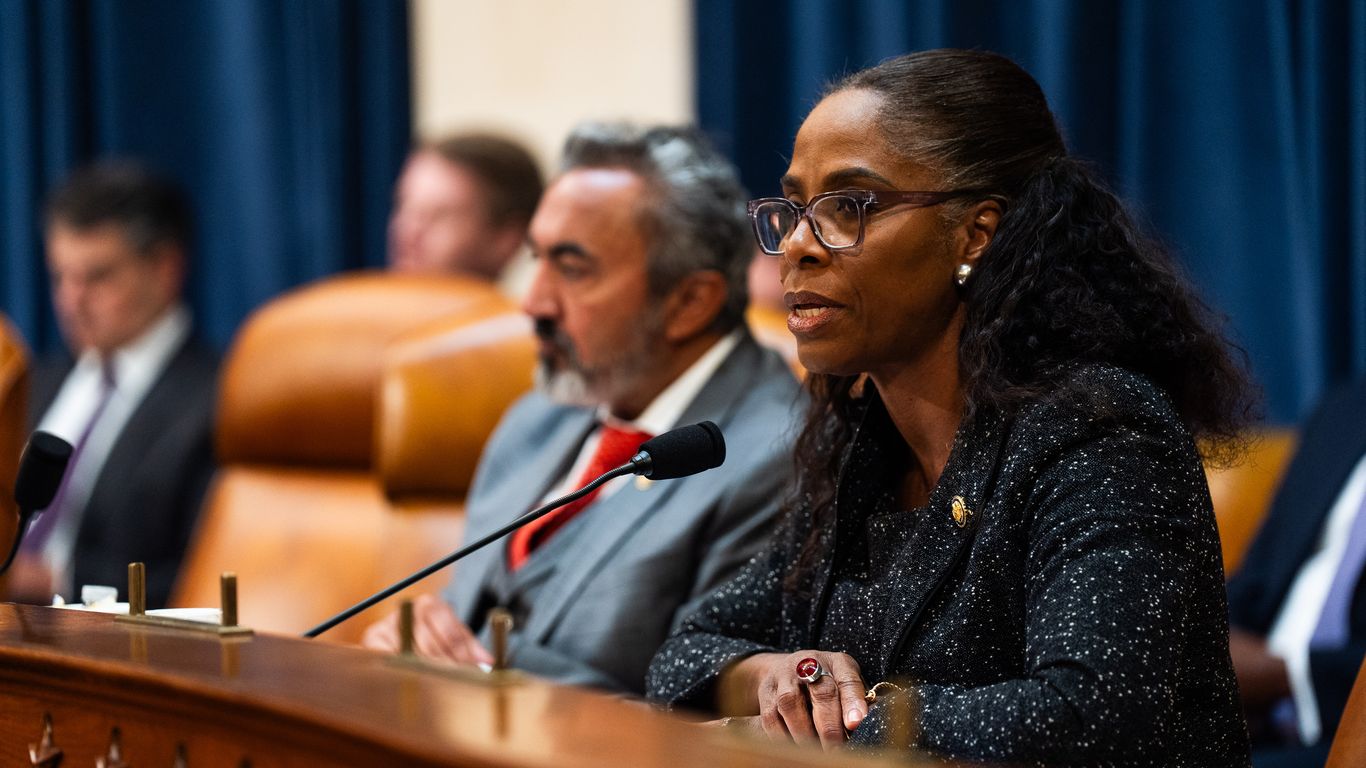
The United States House of Representatives descended into unprecedented partisan warfare as Republican lawmakers initiated a controversial move to remove Democratic Delegate Stacey Plaskett from her position on the House Intelligence Committee, citing newly surfaced connections between the Virgin Islands representative and convicted sex offender Jeffrey Epstein. The dramatic escalation represents one of the most contentious episodes in recent congressional history, with both parties engaging in retaliatory threats that threaten to permanently alter the delicate balance of power within crucial oversight committees.
The Republican-led initiative, which gained momentum following the release of previously sealed documents related to the Epstein case, centers on alleged communications between Plaskett and Epstein that Republicans claim compromise her ability to serve effectively on the intelligence panel. The documents, which were part of a broader cache of materials released through ongoing litigation, reportedly show casual correspondence between the two dating back to Plaskett's time as a prosecutor in the Virgin Islands, before Epstein's 2008 conviction for soliciting prostitution from a minor.
House Republicans, led by Representative Andy Biggs of Arizona, argued that Plaskett's past relationship with Epstein, regardless of its nature, creates an unacceptable conflict of interest given the Intelligence Committee's access to highly classified national security information. They contend that any association with Epstein, who was later accused of running an international sex trafficking ring involving underage girls, demonstrates poor judgment that undermines public trust in congressional oversight bodies. The GOP lawmakers emphasized that maintaining the integrity of intelligence committees requires members with unimpeachable character and judgment.
Democrats immediately countered these allegations as baseless political theater, noting that Plaskett's interactions with Epstein occurred during her official duties as a prosecutor and were part of her professional responsibilities rather than personal relationships. They emphasized that as the top law enforcement official in the Virgin Islands at the time, Plaskett had legitimate reasons to engage with Epstein, who owned property on Little St. James island and was under investigation for various criminal activities. Party leaders highlighted that attempting to remove a duly appointed committee member based on professional contacts from over a decade ago sets a dangerous precedent.
The procedural battle that ensued revealed the deep fractures within the House, as Democrats initially attempted to quash the Republican measure by referring it to the House Ethics Committee for review. This parliamentary maneuver, which would have effectively delayed any immediate action on the removal effort, failed by the narrowest of margins in a 213-214 vote that saw several members cross party lines. The razor-thin margin underscored the controversial nature of the proceedings and the high political stakes involved for both parties.
House Minority Leader Hakeem Jeffries immediately denounced the Republican move as an unprecedented partisan attack that undermines the institutional integrity of Congress. He argued that the effort to remove Plaskett represents a dangerous escalation in the ongoing political warfare between the parties, warning that such actions could permanently damage the bipartisan cooperation necessary for effective governance. Jeffries emphasized that Plaskett has been an effective and respected member of the Intelligence Committee, bringing crucial perspectives from her territories and legal background.
The Democratic response escalated quickly, with party leaders threatening retaliatory measures that could reshape committee assignments across the House. Representative Alexandria Ocasio-Cortez emerged as a vocal defender of Plaskett, suggesting that Democrats should respond by attempting to remove Republican Representative Cory Mills from the Armed Services Committee, citing his promotion of conspiracy theories and controversial statements about various political issues. This tit-for-tat approach raised concerns about the potential for complete breakdown of the committee system that has governed congressional operations for decades.
Republican leaders dismissed Democratic objections as hypocritical, pointing to previous instances where Democrats have called for Republican members to be removed from committees based on their past associations and statements. They argued that the same standards Democrats apply to Republicans should be applied to their own members, particularly when dealing with sensitive intelligence matters. House Speaker Mike Johnson defended the move as necessary to maintain public confidence in congressional oversight of intelligence agencies.
The controversy has deep roots in the complex history between Plaskett and the Virgin Islands' most infamous resident. As the territory's top prosecutor from 2010 to 2014, Plaskett had numerous interactions with Epstein, who owned the neighboring island of Little St. James and was already facing scrutiny for his activities. Legal experts note that prosecutors often must engage with individuals under investigation, and these professional contacts should not be conflated with personal relationships or endorsement of criminal behavior.
The timing of the Republican move has also drawn scrutiny, coming just weeks before crucial intelligence briefings on national security threats and amid ongoing investigations into foreign interference in American elections. Critics argue that removing an experienced committee member during such critical periods could undermine congressional oversight capabilities and potentially compromise national security. They contend that the partisan benefits for Republicans are outweighed by the potential risks to effective intelligence oversight.
Constitutional scholars have raised concerns about the broader implications of this precedent, noting that Congress has historically been reluctant to remove members from committees based on past associations or conduct that occurred before their service in Congress. They warn that normalizing such removals could lead to constant partisan warfare over committee assignments, making it impossible for either party to maintain stable leadership on crucial oversight panels. This could ultimately weaken Congress's ability to check executive power and conduct effective investigations.
The Virgin Islands political community has rallied around Plaskett, with local leaders condemning what they characterize as an attack on their territory's representation in Congress. They emphasize that Plaskett has been a tireless advocate for Virgin Islands interests and has brought valuable Caribbean perspectives to national security discussions. Local officials argue that removing her from the Intelligence Committee would effectively disenfranchise the territory's residents, who rely on her advocacy to ensure their security concerns are addressed at the federal level.
International relations experts have expressed concern about the message this internal conflict sends to American allies and adversaries, particularly regarding the stability and coherence of American intelligence oversight. They note that foreign intelligence services closely monitor such developments, and visible partisan divisions in intelligence committees could be exploited by those seeking to undermine American security interests. The timing is particularly sensitive given ongoing global tensions and the need for unified responses to emerging threats.

The media coverage of the controversy has revealed deep divisions in how different outlets frame the story, with conservative media emphasizing the Epstein connection as evidence of Democratic hypocrisy, while progressive outlets focus on Republican overreach and the dangerous precedent being set. This polarization in coverage reflects broader media fragmentation and the challenge of maintaining objective reporting standards in an increasingly partisan environment. Media analysts note that such coverage patterns often reinforce rather than clarify public understanding of complex political issues.
Public opinion polling on the matter shows Americans deeply divided along partisan lines, with Republican voters overwhelmingly supporting Plaskett's removal while Democratic voters view it as political persecution. Independent voters appear split, with many expressing concern about the precedent being set but also discomfort with any perceived connections to Epstein's crimes. These divisions highlight the challenge of maintaining public trust in institutions when partisan interpretations of events vary so dramatically.
The historical context of intelligence committee membership provides important perspective on this controversy, as both parties have previously resisted efforts to remove members based on past associations or controversial statements. The committees have traditionally operated under norms of professional courtesy and respect for electoral choices, with members generally refraining from challenging opponents' committee assignments. Breaking this tradition could fundamentally alter how Congress operates and the willingness of qualified individuals to serve on sensitive committees.
Legal analysts have examined the specific charges against Plaskett and found them to be based on routine professional interactions that occurred during her official duties as a prosecutor. They argue that applying guilt by association standards to professional contacts would make it impossible for many qualified individuals to serve in Congress, particularly those with prior legal or law enforcement experience. These experts emphasize the importance of distinguishing between professional obligations and personal relationships when evaluating potential conflicts of interest.
The role of outside interest groups in amplifying this controversy has also drawn attention, with various political action committees and advocacy organizations launching campaigns both supporting and opposing Plaskett's removal. These groups have flooded social media with conflicting narratives, organized grassroots mobilization efforts, and pressured lawmakers to take specific positions. The involvement of well-funded outside groups has intensified the pressure on lawmakers and complicated efforts to resolve the issue through traditional legislative processes.
Looking ahead, the resolution of this controversy could have lasting implications for congressional operations and the balance of power between the parties. If Republicans succeed in removing Plaskett, Democrats may feel compelled to respond in kind when they regain control, potentially leading to a cycle of retaliatory removals that could paralyze committee operations. Alternatively, if Democrats successfully defend Plaskett, it could embolden them to take more aggressive positions in future partisan conflicts.
The broader implications for American democracy and institutional stability have concerned observers across the political spectrum, who warn that the breakdown of traditional norms governing congressional behavior could have consequences far beyond this specific controversy. They argue that the willingness to use any available procedural tool to gain partisan advantage, regardless of long-term institutional costs, represents a dangerous erosion of the guardrails that have historically protected American governance from the worst excesses of political warfare.
As the House moves toward a final vote on Plaskett's fate, the stakes extend far beyond one committee assignment or one member's career. The outcome will likely shape the future of congressional oversight, the balance between partisan advantage and institutional integrity, and the public's faith in their elected representatives' ability to rise above political gamesmanship to serve the national interest. The resolution of this controversy may well determine whether Congress can function effectively in an era of intense political polarization and declining trust in democratic institutions.
Categories:




Please log in to leave a comment.
Comments 0
Loading comments...
No comments yet. Be the first to comment!