

- BYAlina Harold - 20 Nov, 2025
- 10 Mins Read
- 3 views



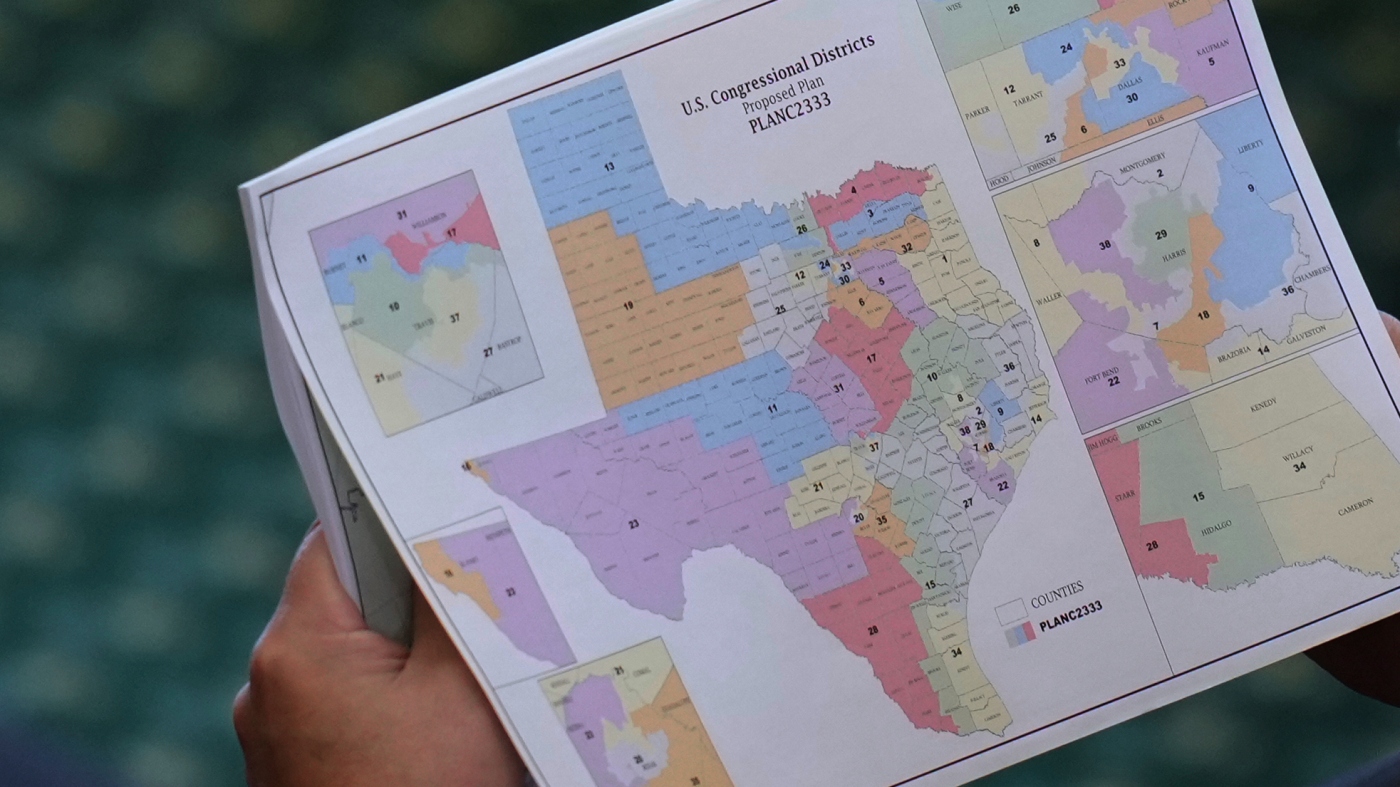
The battle over Texas's electoral map has intensified dramatically as Governor Greg Abbott's administration filed an emergency appeal to the Supreme Court, seeking to overturn a federal judge's determination that the state's new congressional districts represent an unconstitutional racial gerrymander rather than a legitimate political realignment. The controversial redistricting plan, initially championed by former President Donald Trump and Republican lawmakers, faces mounting legal challenges that could fundamentally reshape how Texas conducts its 2026 midterm elections and potentially influence the balance of power in the House of Representatives.
Federal District Judge David Guaderrama of El Paso delivered a scathing 127-page ruling that meticulously documented how Republican legislators systematically diluted the voting power of predominantly Hispanic and African American communities across the Lone Star State. The court found compelling evidence that lawmakers deliberately manipulated district boundaries to suppress minority representation while maintaining a facade of partisan advantage, violating both the Equal Protection Clause of the Fourteenth Amendment and the Voting Rights Act's protections against racial discrimination in electoral processes.
The legal controversy centers on Texas's rapid demographic transformation over the past decade, where communities of color accounted for over 95 percent of the state's population growth according to the 2020 census. Despite this dramatic shift, Republican mapmakers crafted districts that effectively minimized the political influence of these growing populations, particularly in the Dallas-Fort Worth metroplex, Houston suburbs, and the Rio Grande Valley. The court documented how legislators employed sophisticated data analysis techniques to identify and fracture minority communities, spreading their voting power across multiple districts to prevent the formation of competitive minority-opportunity districts.
Legal experts have characterized this case as potentially one of the most significant voting rights decisions in recent American history, with implications extending far beyond Texas's borders. The Supreme Court's eventual ruling could establish new precedents for how courts evaluate the distinction between permissible partisan gerrymandering and unconstitutional racial discrimination in redistricting processes. Constitutional law professor Richard Hasen of UCLA noted that the case represents a critical test of whether the judiciary can effectively police racial manipulation in an era where lawmakers increasingly use sophisticated computer modeling to disguise discriminatory intent behind claims of political strategy.
The federal court's analysis revealed how Republican consultants and lawmakers utilized advanced mapping software to analyze racial and voting patterns at the precinct level, identifying precisely where to draw lines that would maximize Republican electoral advantages while minimizing minority voting strength. Expert witnesses testified that the resulting map eliminated or significantly altered seven districts where minority voters previously had meaningful opportunities to elect their preferred candidates, replacing them with districts where minority voters were either submerged within overwhelming Republican majorities or cracked across multiple districts.
Texas Attorney General Ken Paxton's office immediately condemned the federal court's ruling as an infringement on state sovereignty and legislative authority, arguing that the decision improperly injects federal courts into what should be a state political process. In their emergency filing to the Supreme Court, state attorneys contend that the district court applied an overly stringent standard for proving racial discrimination and failed to give appropriate deference to legitimate political considerations that traditionally guide redistricting decisions in America's federalist system.
The legal challenge emerged from a coalition of civil rights organizations, including the Mexican American Legal Defense and Educational Fund, the NAACP Legal Defense Fund, and the League of United Latin American Citizens, who collectively represent individual voters and community organizations across Texas. These groups spent months gathering evidence, conducting depositions, and analyzing the complex mathematical models underlying the redistricting plan, ultimately convincing the court that race predominated over traditional redistricting criteria like compactness, contiguity, and respect for political subdivisions.
Historical context illuminates how Texas's current redistricting controversy fits within a broader pattern of voting rights struggles that have persisted since Reconstruction. The state has faced more successful voting rights challenges than any other in the nation, with federal courts repeatedly finding that Texas officials have engaged in discriminatory practices ranging from voter ID requirements to polling place closures. This litigation represents the latest chapter in a 150-year struggle over who gets to participate in American democracy and how electoral systems can fairly represent rapidly changing populations.
The timing of this appeal proves particularly crucial as Texas election officials face rapidly approaching deadlines for preparing ballots, voter registration systems, and polling place assignments for the 2026 midterm elections. The Supreme Court's decision on whether to stay the district court's ruling could determine whether elections proceed under the disputed map or require implementation of alternative districts, potentially creating confusion and uncertainty for both election administrators and voters across the nation's second-largest state.
Political analysts suggest that the redistricting battle reflects broader demographic anxieties within the Republican Party as Texas's electorate becomes increasingly diverse and urbanized. Recent election cycles have seen historically Republican suburban districts become increasingly competitive, with Democrats winning several congressional seats and making significant gains in the state legislature. The contested map represents an attempt to fortify Republican advantages before demographic trends potentially shift the state's political balance, raising questions about whether parties can legitimately use redistricting to resist changing voter preferences.
The district court's ruling extensively documented how Republican lawmakers received guidance from national GOP consultants who explicitly discussed the need to protect Republican incumbents from growing minority populations. Internal communications revealed legislators expressing concerns about the "Hispanic invasion" and discussing strategies to prevent the formation of districts where minority voters could elect candidates of their choice. Such evidence proved crucial in establishing that race rather than politics motivated the challenged district configurations, satisfying the demanding legal standard for proving unconstitutional racial gerrymandering.
Constitutional scholars note that the Supreme Court's resolution of this case could significantly impact voting rights jurisprudence nationwide, particularly given the Court's 2019 decision that federal courts lack authority to review purely partisan gerrymandering claims. By emphasizing racial discrimination rather than political manipulation, plaintiffs hope to establish clearer constitutional limits on how aggressively lawmakers can reshape electoral districts to their advantage. The case may force the Court to clarify murky distinctions between permissible political considerations and impermissible racial motivations in redistricting.
The practical implications extend beyond congressional districts to affect state legislative maps, local government boundaries, and school board elections throughout Texas. Minority communities have argued that discriminatory redistricting perpetuates inequality across multiple levels of government, limiting their ability to influence education policy, infrastructure investment, healthcare access, and criminal justice reform. The federal court's ruling recognized these interconnected impacts, emphasizing how electoral discrimination compounds existing social and economic disparities.
Texas's rapid growth and diverse population make it a crucial battleground for voting rights, with its 40 electoral votes and 38 congressional seats giving it outsized influence in national politics. The state's handling of redistricting issues provides a window into how America's changing demographics challenge existing political structures, forcing courts to grapple with fundamental questions about representation, equality, and the meaning of democratic governance in an increasingly diverse society.
Legal proceedings have revealed how technological advances in data analysis and mapping software have revolutionized gerrymandering, enabling lawmakers to achieve unprecedented precision in manipulating electoral boundaries. Expert witnesses demonstrated that modern redistricting involves processing massive datasets about voter registration, election results, demographic characteristics, and consumer preferences to optimize maps for specific political outcomes. This technological sophistication makes racial discrimination more difficult to detect and prove, requiring courts to develop new analytical frameworks for evaluating constitutional violations.
The case highlights ongoing tensions between federal oversight and state sovereignty in American election law, particularly regarding the appropriate role of courts in reviewing political decisions that affect democratic representation. Conservatives argue that aggressive judicial intervention threatens federalism principles and improperly limits elected officials' discretion in structuring democratic institutions. Liberals counter that robust judicial enforcement of voting rights remains essential to protect minority participation in electoral processes, particularly given America's history of racial discrimination in voting.
Election administration experts warn that prolonged legal uncertainty could complicate preparations for the 2026 midterm elections, potentially affecting everything from candidate filing deadlines to early voting schedules. Texas election officials have requested clear guidance from the courts about which district boundaries should govern various electoral processes, noting that conflicting rulings could create chaos for voters trying to understand which districts they live in and which candidates represent them.
The Supreme Court's eventual handling of this appeal could influence redistricting battles brewing in numerous other states where similar conflicts between changing demographics and established political arrangements create pressures for electoral map revisions. Legal observers note that the Court may use this case to provide clearer guidance about how lower courts should evaluate racial gerrymandering claims, potentially establishing standards that affect redistricting litigation nationwide for decades to come.
Civil rights advocates view the Texas case as part of a broader struggle to maintain and expand voting rights protections following the Supreme Court's 2013 decision in Shelby County v. Holder, which invalidated key provisions of the Voting Rights Act. Without federal pre-clearance requirements that previously forced Texas and other states with histories of discrimination to obtain approval before changing voting procedures, minority communities increasingly rely on litigation to challenge discriminatory electoral practices after implementation.
The economic implications of electoral discrimination extend beyond political representation to affect economic development, education funding, infrastructure investment, and access to government services in minority communities. Research demonstrates that discriminatory redistricting correlates with reduced government responsiveness to minority needs, perpetuating cycles of disadvantage that span generations. The federal court's ruling recognized these broader impacts, emphasizing how electoral discrimination undermines democratic legitimacy and social cohesion.
Texas's handling of this redistricting controversy may influence how other rapidly diversifying states approach electoral map-making as they grapple with similar tensions between established political arrangements and changing demographics. States like Georgia, North Carolina, Arizona, and Florida face comparable challenges in balancing legitimate political considerations against constitutional protections for minority voting rights, making the Supreme Court's guidance potentially influential nationwide.
The legal battle reflects broader questions about how American democracy adapts to demographic change, particularly whether existing political institutions can accommodate growing diversity without fundamental restructuring. As minority populations increase in states like Texas, conflicts over political representation intensify, testing whether democratic processes can manage peaceful transitions of power while protecting constitutional rights for all citizens.
Constitutional law experts suggest that the Supreme Court's resolution of this case could establish important precedents about how courts evaluate discriminatory intent in an era when lawmakers increasingly use sophisticated analytical tools to disguise discriminatory purposes. The Court may need to address whether traditional standards for proving racial discrimination remain adequate when lawmakers can point to legitimate political considerations as alternative explanations for their actions, even when circumstantial evidence suggests discriminatory motivations.
The case demonstrates how redistricting disputes have become increasingly high-stakes battles that involve massive financial investments, sophisticated expert analysis, and prolonged litigation campaigns that can extend for years. Both political parties have developed specialized legal teams, data analysis capabilities, and expert networks to handle complex redistricting litigation, reflecting how electoral map-making has evolved into a sophisticated industry that affects democratic governance nationwide.
As the Supreme Court considers Texas's appeal, the nation watches to see whether constitutional protections for minority voting rights remain robust in an era of increasing political polarization and sophisticated electoral manipulation. The Court's decision will likely reverberate through American democracy for decades, influencing how states can respond to demographic change while respecting constitutional principles of equal protection and meaningful political participation.
Categories:



Please log in to leave a comment.
Comments 0
Loading comments...
No comments yet. Be the first to comment!