

- BYAdriana Alejandro - 20 Nov, 2025
- 9 Mins Read
- 6 views



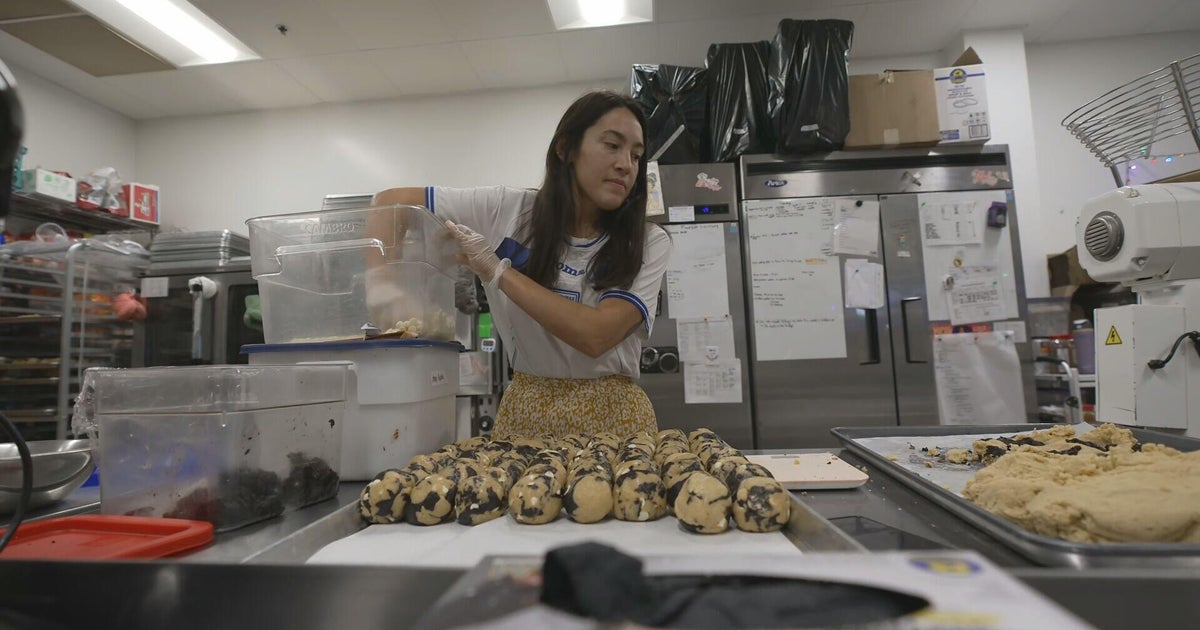
Cristina Rojas, a Mexican‑born baker who proudly received her naturalization certificate in March, announced a temporary shutdown of The Batchmaker, her beloved bakery nestled in Charlotte’s historic Dilworth neighborhood. The decision was not driven by financial strain but by a palpable fear that heightened immigration enforcement could jeopardize the safety of her staff, customers, and the broader community that has come to view her shop as a culinary haven. In a candid interview with CBS News, Rojas expressed that a piece of paper confirming citizenship does not erase the very real concerns tied to her appearance and heritage.
To understand why a newly minted citizen would feel compelled to close her doors, one must examine the broader context of the immigration crackdown that intensified during the final months of the Trump administration. Policies such as the expansion of the 287(g) program, increased funding for Immigration and Customs Enforcement (ICE), and the controversial “public charge” rule created an environment where undocumented individuals and even recent citizens felt vulnerable. According to a 2020 Pew Research Center report, over 30 percent of immigrant‑owned small businesses reported scaling back operations or closing entirely due to fear of raids.
The Batchmaker itself is more than a bakery; it is a cultural touchstone that has infused Charlotte’s food scene with artisanal breads, pastries, and a welcoming atmosphere that reflects Rojas’s Mexican roots blended with Southern hospitality. Opened in 2017, the shop quickly earned accolades from local food critics, who praised its sourdough boules and churro‑inspired cinnamon rolls. The bakery has also served as a community hub, hosting language‑exchange evenings, youth art showcases, and charity drives for local shelters, thereby weaving itself into the social fabric of the city.
Rojas’s personal journey began in a small town near Monterrey, where she learned the basics of baking from her grandmother. She arrived in the United States in 2008 on a tourist visa, later transitioning to a work visa after securing employment at a commercial kitchen. Over the next decade, she navigated a labyrinthine immigration system, enduring periods of uncertainty before finally achieving citizenship. Her story mirrors that of thousands of immigrants who view naturalization as both a culmination of perseverance and a gateway to full participation in American civic life.
The naturalization ceremony itself was a moment of profound emotion for Rojas and her family. Standing before a judge, she recited the Oath of Allegiance while tears streamed down her cheeks, a symbolic affirmation of belonging. Yet, as she later reflected, the ceremony did not instantly erase the external perceptions that can trigger bias. “The fact that a paper tells me you’re now a citizen of this country doesn’t take away from the fact that I look the way I look,” she told the reporter, underscoring the lingering reality of visual profiling.
Data from the American Immigration Council indicates that between 2017 and 2019, ICE conducted over 1,200 enforcement actions targeting workplaces, many of which were small, family‑run establishments. In Texas, for example, a 2018 raid on a taco truck resulted in the arrest of three undocumented workers and the temporary closure of the business, causing an estimated $250,000 loss in revenue. Such incidents have generated a chilling effect, prompting owners like Rojas to preemptively suspend operations rather than wait for a surprise inspection.
Legal scholars at the University of North Carolina’s School of Law warn that this climate erodes the economic contributions of immigrant entrepreneurs. Professor Elena Martinez argues that “the threat of enforcement creates a climate of fear that discourages investment, stifles job creation, and ultimately harms the broader economy.” She notes that immigrant‑owned businesses generate roughly $1.5 trillion in annual sales nationwide, a figure that could shrink if fear continues to drive closures.
Similar stories have unfolded across the country, illustrating that Rojas’s experience is part of a national pattern. In Los Angeles, a family‑run taqueria shut its doors after a neighboring bakery was raided, fearing collateral scrutiny. In Chicago, a Korean‑owned bakery reported a 40 percent drop in foot traffic after local news highlighted the owner’s immigration status, despite his legal residency. These case studies demonstrate how perception alone can trigger economic fallout, even when no legal violation has occurred.
The economic ramifications extend beyond the owners themselves. Small businesses like The Batchmaker employ local residents, purchase supplies from nearby vendors, and contribute to municipal tax bases. The National Bureau of Economic Research estimates that each dollar spent at a locally owned bakery circulates up to three times within the community, supporting ancillary sectors such as real estate, transportation, and public services. A temporary closure, therefore, ripples through the local economy, affecting not only the bakery’s staff but also the dozens of suppliers and freelancers who rely on its steady business.
Community reaction to Rojas’s announcement has been swift and supportive. A petition on Change.org calling for a “Safe Bakery Initiative” quickly amassed over 12,000 signatures, urging city officials to provide protective measures for immigrant‑owned enterprises. Local residents organized a “Bread for Rojas” fundraiser, raising $8,500 to assist employees during the shutdown. Social media posts featuring photos of The Batchmaker’s iconic pastries have been shared widely, reinforcing the bakery’s symbolic importance to Charlotte’s cultural landscape.
City council members have publicly expressed solidarity, with Councilwoman Maya Patel stating that “Charlotte thrives on the diversity and entrepreneurship of its residents, and we will explore policy tools to safeguard businesses like The Batchmaker.” The mayor’s office has indicated a willingness to convene a task force comprising law enforcement, legal aid groups, and business owners to develop guidelines that balance immigration enforcement with economic stability. Such political engagement underscores the growing recognition that immigration policy cannot be divorced from local economic health.
From a legal standpoint, owners facing similar dilemmas have several avenues to consider. Temporary closures can be coupled with filing for protective orders under the Civil Rights Act if there is evidence of discriminatory enforcement. Additionally, organizations like the American Civil Liberties Union (ACLU) offer pro bono counsel to businesses threatened by ICE actions, helping them navigate the complex interplay between federal immigration law and state labor protections. However, the process can be time‑consuming and emotionally draining, further contributing to the hesitation many owners feel.
Rojas remains hopeful about reopening The Batchmaker once she feels confident that her staff and patrons are safe. She is exploring options such as installing enhanced security cameras, partnering with local advocacy groups for rapid response, and possibly relocating to a venue with a more discreet storefront. In a recent update, she hinted at a “soft launch” in the coming months, where limited hours and a reduced menu will allow her to gauge community sentiment while maintaining a presence in the neighborhood.
The broader narrative of immigrant entrepreneurship in the United States is one of resilience and innovation. Historically, immigrants have founded businesses at rates higher than native‑born citizens, contributing to sectors ranging from technology to hospitality. A 2018 report by the Fiscal Policy Institute found that immigrant‑owned firms employ over 8 million workers and generate $1.4 trillion in sales, underscoring their pivotal role in the nation’s economic engine.
Looking back, the United States has long benefited from the culinary contributions of immigrant bakers, from the Italian pizzerias that dotted New York in the early 20th century to the Vietnamese bánh mì shops that flourished in the Pacific Northwest after the Vietnam War. These establishments not only introduced new flavors but also fostered cross‑cultural exchange, enriching the American palate. The Batchmaker continues this tradition by blending Mexican techniques with Southern grain varieties, creating a unique gastronomic dialogue.
Statistical data highlights that the bakery sector is disproportionately populated by immigrant owners. The National Association of Bakery Owners reports that approximately 38 percent of independent bakeries are owned by first‑ or second‑generation immigrants. These businesses often operate on thin margins, making them especially vulnerable to disruptions caused by legal uncertainties or sudden enforcement actions.
With the inauguration of the Biden administration, there is cautious optimism among immigrant entrepreneurs that federal enforcement priorities may shift toward focusing on genuine security threats rather than broad workplace raids. Executive orders issued in early 2021 directed ICE to prioritize the removal of individuals with criminal convictions, potentially reducing the frequency of raids on small businesses. Nonetheless, policy changes at the federal level can take months to translate into tangible relief for local owners.
Advocacy groups such as United We Dream and the National Immigration Law Center have launched campaigns specifically aimed at protecting immigrant‑owned small businesses. Their “Protect the Bread” initiative calls for municipalities to adopt “sanctuary business” ordinances that limit cooperation with ICE in the absence of criminal activity. Early adopters like San Francisco have reported a measurable decline in business closures attributed to immigration enforcement, suggesting a model that other cities might emulate.
The cultural implications of losing establishments like The Batchmaker extend beyond economics. Food venues serve as informal classrooms where residents learn about different traditions, languages, and histories. When a bakery closes, the community loses a space for intergenerational storytelling, for children to experience multicultural flavors, and for neighbors to gather over shared meals. Scholars of cultural anthropology warn that such losses can accelerate assimilation pressures and diminish the rich tapestry of American diversity.
In the months ahead, Rojas’s experience will likely serve as a case study for policymakers, scholars, and activists seeking to balance immigration enforcement with economic vitality. Monitoring the outcomes of her tentative reopening will provide valuable data on how protective measures, community solidarity, and shifting federal priorities intersect in real‑world settings. Researchers plan to conduct longitudinal surveys of customer sentiment, employee stability, and revenue recovery to assess the long‑term impact of the shutdown.
Ultimately, the story of The Batchmaker reflects a broader tension in contemporary America: the promise of inclusion versus the reality of exclusionary practices. While citizenship offers legal recognition, it does not automatically shield individuals from the social and political forces that can threaten their livelihoods. Rojas’s resolve to reopen her bakery, bolstered by community support and evolving policy landscapes, embodies the enduring spirit of immigrant entrepreneurship that has defined the nation since its founding.
As Charlotte residents await the aroma of fresh‑baked bread to fill the streets once more, the city’s collective response may signal a turning point. If local authorities, advocacy groups, and business leaders can forge a collaborative framework that safeguards immigrant‑owned enterprises, the precedent set could ripple across the country, ensuring that the doors of bakeries, taco trucks, and coffee shops remain open for generations to come.
Categories:


Please log in to leave a comment.
Comments 0
Loading comments...
No comments yet. Be the first to comment!