

- BYAdriana Alejandro - 20 Nov, 2025
- 10 Mins Read
- 6 views



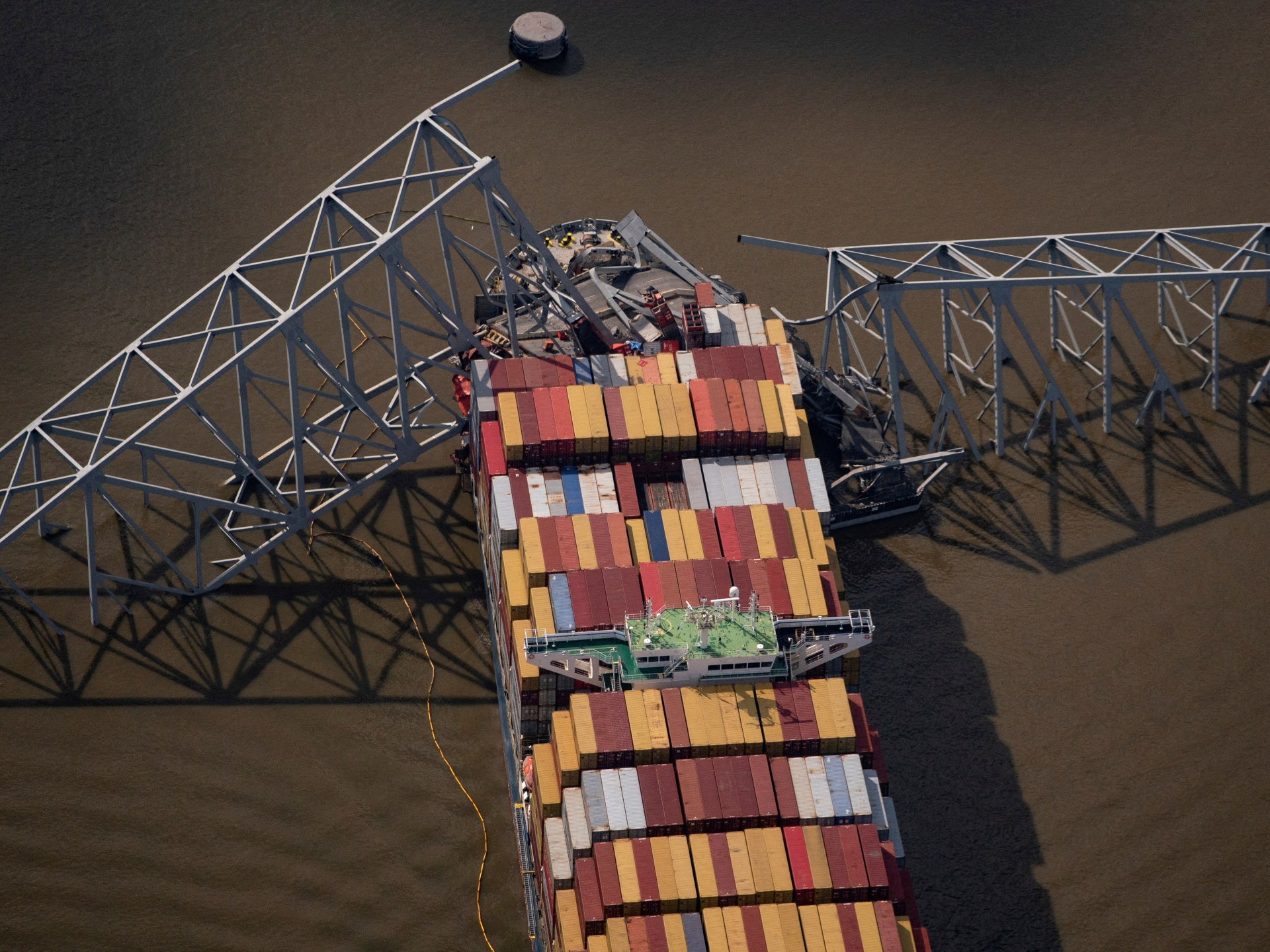
The maritime world stood still on March 26, 2024, when the 300-meter container ship Dali, carrying thousands of tons of cargo across the globe, became a harbinger of destruction in the predawn darkness of Baltimore Harbor. What investigators have now confirmed through meticulous analysis spanning months of forensic examination is both astonishing and terrifying: a single loose wire, no thicker than a pencil lead, was the catalyst that would bring down one of America's most vital transportation arteries. The Francis Scott Key Bridge, a 1.6-mile steel structure that had stood as a testament to American engineering for nearly five decades, would crumble into the Patapsco River in a matter of seconds, forever changing the landscape of maritime transportation and raising urgent questions about the vulnerability of our modern infrastructure.
The Dali, registered in Singapore and operated by Synergy Marine Group, had departed from the Port of Baltimore at approximately 1:00 AM, carrying 4,700 shipping containers bound for Sri Lanka. The vessel, built in 2015 and measuring longer than three football fields, represented the pinnacle of modern maritime engineering, equipped with state-of-the-art navigation systems and multiple redundant safety mechanisms. Yet, as the ship made its way through the main shipping channel, a sequence of events began to unfold that would expose critical vulnerabilities in even the most sophisticated maritime vessels. The investigation, led by the National Transportation Safety Board in collaboration with international maritime authorities, has revealed that the disaster was not the result of a single catastrophic failure, but rather a complex chain of events triggered by an electrical fault that should have been caught during routine maintenance.
The first signs of trouble emerged when the ship's electrical system experienced what maritime engineers term a 'blackout' – a complete loss of power that left the vessel drifting without propulsion or steering capabilities. Initial reports suggested this was an isolated incident, but subsequent investigations revealed this was actually the second blackout the vessel had experienced within a 24-hour period. The first occurred while the ship was still docked, causing concern among the crew but not enough to delay departure. Maritime safety experts have since criticized this decision, noting that electrical anomalies in port should always warrant thorough investigation before departure, especially when the ship is carrying hazardous materials in some of its containers. The loose wire, investigators discovered, was located in a critical junction box that controlled power distribution to the ship's main engine and steering systems, creating a domino effect that would ultimately prove catastrophic.
Captain Sarah Mitchell, a veteran maritime safety consultant with over thirty years of experience in commercial shipping, explains that the electrical systems on modern container ships are incredibly complex, with thousands of miles of wiring running through every section of the vessel. 'These ships are essentially floating cities,' she notes, 'with electrical demands that rival small towns. When something goes wrong in the electrical system, it can trigger failures in multiple subsystems simultaneously.' The investigation revealed that the loose wire in question had likely been improperly secured during previous maintenance work, possibly months or even years before the incident. Over time, the constant vibration of the ship's engines and the natural movement of ocean travel caused the wire to work itself free, eventually creating an intermittent fault that would prove deadly.
As the Dali approached the Francis Scott Key Bridge, traveling at approximately 9 knots (about 10 miles per hour), the second blackout occurred at 1:28 AM. The ship's pilot, Captain Donovan McGee, immediately attempted to alert authorities and take corrective action, but the loss of power meant he had no control over the vessel's direction or speed. Security footage shows the ship's lights flickering and going dark multiple times, creating an eerie sight against the night sky. The massive vessel, now essentially a floating object weighing over 100,000 tons, was on a collision course with one of the bridge's main support piers. The frantic radio calls between the ship and shore authorities captured the desperate attempts to avert disaster, with the pilot's voice growing increasingly urgent as he realized the inevitability of impact.
The Francis Scott Key Bridge, completed in 1977 at a cost of $60 million, was a critical piece of American infrastructure that carried Interstate 695 over the Patapsco River. Named after the author of the Star-Spangled Banner, the bridge was a vital link for commuters and commercial traffic, with an estimated 11.5 million vehicles crossing it annually. The bridge's design, typical of 1970s engineering, featured a main span of 1,200 feet supported by massive concrete piers designed to withstand significant forces. However, no one had anticipated the impact of a modern mega-container ship weighing over 100,000 tons when fully loaded. The collision occurred at 1:29 AM, with the ship striking the southwest pier of the main span at full force, severing critical support structures and causing an immediate progressive collapse of the entire central section.
The collapse itself lasted only seconds but was captured in dramatic detail by multiple security cameras and dash cameras from vehicles that had been stopped on the bridge. The footage shows the bridge seeming to buckle in slow motion before the entire center section plunged into the water below, taking with it any vehicles that happened to be crossing at that moment. The sound of twisting metal and concrete crumbling was reportedly heard for miles, with residents describing it as similar to thunder or an explosion. Emergency response teams arrived within minutes, but the darkness and instability of the remaining structure made rescue operations extremely dangerous. The water temperature was approximately 47 degrees Fahrenheit, giving anyone who might have survived the fall from the bridge deck only minutes before hypothermia would make survival impossible.
The aftermath of the collapse extended far beyond the immediate tragedy. The Port of Baltimore, one of the busiest on the East Coast, was forced to close indefinitely, disrupting supply chains across the Eastern United States. Over 15,000 jobs directly related to port operations were affected, with economic losses estimated at $15 million per day during the closure. The bridge carried not only commuters but also hazardous materials that couldn't be transported through the tunnels, forcing these materials onto lengthy detours that added hundreds of miles to journeys. Local businesses reported losses in the millions, and the ripple effects were felt throughout the regional economy. The environmental impact was also significant, with diesel fuel from vehicles on the bridge and potentially hazardous materials from the ship's containers creating contamination concerns that required extensive cleanup efforts.
The investigation into the disaster has prompted a global reassessment of maritime safety protocols, particularly regarding the interaction between ships and infrastructure. Dr. James Liu, a professor of maritime engineering at MIT, explains that the collision has exposed a critical vulnerability in how we protect vital infrastructure from maritime accidents. 'We've designed our bridges and ports separately,' he notes, 'without fully considering how the increasing size of modern vessels creates new risks.' The Dali was classified as a 'New Panamax' vessel, meaning it was built to the maximum dimensions allowed through the Panama Canal. These ships, which can carry up to 14,000 containers, represent a new class of mega-vessels that have become increasingly common as global trade has expanded. The Francis Scott Key Bridge, like many bridges of its era, was simply not designed with these massive vessels in mind.
The legal ramifications of the disaster have been equally complex, involving multiple jurisdictions and international maritime law. The ship's owners, operators, and potentially the manufacturers of its electrical systems all face significant liability claims. Under the Limitation of Liability Act of 1851, shipowners can potentially limit their liability to the value of the vessel and its cargo after a maritime accident, but this protection can be lost if negligence can be proven. The families of the victims, along with the state and federal governments, have filed numerous lawsuits seeking compensation for both economic and personal losses. The litigation is expected to continue for years, with legal experts predicting it could become one of the most complex maritime law cases in American history.
In response to the disaster, the U.S. Coast Guard and international maritime authorities have implemented new safety measures aimed at preventing similar incidents. Ships are now required to undergo more frequent electrical system inspections, with particular attention paid to wiring integrity and connection security. New guidelines mandate that vessels experiencing any electrical anomalies while in port must undergo thorough investigation before departure, regardless of schedule pressures. Additionally, many ports have implemented new requirements for tugboat escorts for large vessels, especially those carrying hazardous materials or transiting near critical infrastructure. The International Maritime Organization has begun developing new standards for ship electrical systems, with particular focus on redundancy and fault tolerance.
The reconstruction of the Francis Scott Key Bridge has become a priority for both state and federal authorities, with plans calling for a new bridge designed to modern standards with enhanced protection against ship impacts. The new design includes massive concrete barriers, known as 'dolphins,' around critical support piers, designed to absorb the impact of even the largest vessels. The estimated cost for the new bridge is over $1.7 billion, with completion targeted for 2028. The project has also sparked broader discussions about infrastructure resilience in an era of climate change and increasing maritime traffic. Engineers are incorporating lessons learned from the collapse, including better early warning systems and more robust protection measures for critical infrastructure.
The human cost of the disaster extends beyond the immediate victims to include the psychological impact on survivors, first responders, and the broader community. Many of those involved in rescue and recovery efforts have reported symptoms consistent with post-traumatic stress disorder, including nightmares, anxiety, and depression. The maritime community, particularly pilots and captains operating in Baltimore Harbor, have spoken of the lasting impact on their sense of safety and security. Captain McGee, the pilot aboard the Dali, has been cleared of any wrongdoing by investigators, but the psychological toll of the experience has been profound. In interviews, he has described the helplessness of watching the collision unfold despite desperate attempts to prevent it, and the ongoing process of coming to terms with an incident that was ultimately beyond his control.
Looking forward, the maritime industry faces significant challenges in balancing the economic demands of global trade with the imperative for enhanced safety. The trend toward ever-larger container ships, driven by economies of scale, shows no signs of abating. The newest vessels, known as 'Ultra Large Container Ships,' can carry over 24,000 containers and measure over 400 meters in length. These floating behemoths represent both the pinnacle of maritime engineering and potential new risks for ports and infrastructure designed decades ago. Industry experts predict that the Baltimore bridge collapse will accelerate investments in port infrastructure upgrades, automated safety systems, and enhanced training for maritime personnel. The incident has also renewed calls for greater international coordination in maritime safety standards, as the global nature of shipping means that a failure in one part of the world can have ripple effects across the entire system.
The story of the Dali and the Francis Scott Key Bridge serves as a sobering reminder of the interconnected nature of modern infrastructure and the potential for small failures to cascade into catastrophic events. As investigators concluded their report, they emphasized that preventing future disasters will require vigilance at every level, from the routine maintenance of ship electrical systems to the design of resilient infrastructure capable of withstanding the forces of modern commerce. In an era when a single loose wire can bring down a major bridge and disrupt the lives of thousands, the margin for error has never been smaller. The legacy of this disaster will likely be felt for decades, shaping how we design, maintain, and protect the critical infrastructure that underpins our global economy.
Categories:




Please log in to leave a comment.
Comments 0
Loading comments...
No comments yet. Be the first to comment!