

- BYAdriana Alejandro - 21 Nov, 2025
- 11 Mins Read
- 6 views



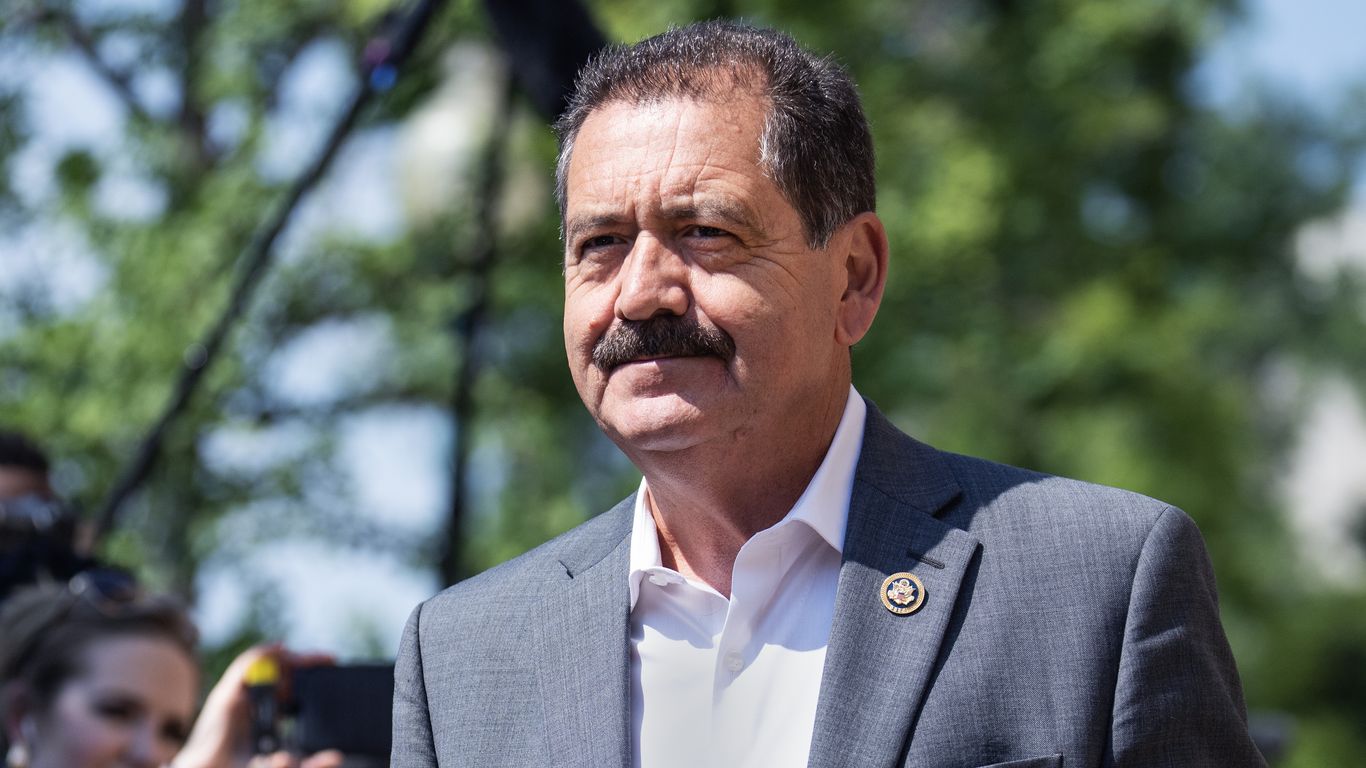
The United States House of Representatives witnessed an unusual spectacle on Thursday when a coalition of twenty‑three Democrats voted alongside Republicans to adopt a formal censure against one of their own, Representative Marie Gluesenkamp‑Perez of Washington's 3rd district. The measure, which passed 236‑183, marked a stark departure from the party's typical solidarity on internal disciplinary actions. Historically, such bipartisan condemnations are rare, with most censure votes reserved for egregious misconduct or criminal allegations. This episode, however, stemmed from a policy dispute that has rattled the Democratic leadership and exposed fissures between its centrist and progressive wings.
Gluesenkamp‑Perez, a relatively new member who won a surprise victory in 2022, has been a vocal critic of certain Democratic strategies, particularly regarding the upcoming midterm elections and the party's approach to the looming debt ceiling negotiations. Her public statements, which accused senior Democratic leaders of “sacrificing progressive values for political expediency,” resonated with a segment of the party’s left flank but alarmed moderates who feared such rhetoric could undermine unified messaging. The resolution, introduced by Representative Jim McGovern, framed her remarks as “undermining the collective responsibility of the Democratic caucus to present a coherent agenda to the American people.”
Political analysts note that the vote reflects deeper ideological tensions that have been simmering since the 2020 presidential primary, when progressive candidates challenged the establishment’s dominance. Dr. Elena Ramirez, a professor of political science at Georgetown University, explains that “the Democratic Party has been navigating a delicate balance between embracing bold progressive policies and maintaining the broad coalition necessary for electoral success.” She adds that the censure vote could be a warning sign that the party’s internal mechanisms for dispute resolution are weakening, potentially leading to more public confrontations in the future. The episode also revives debates about whether formal censure is an appropriate tool for addressing policy disagreements versus ethical violations.
In the weeks leading up to the vote, the Progressive Caucus convened several closed‑door meetings to discuss possible retaliatory measures against Gluesenkamp‑Perez, ranging from committee reassignment to public admonitions. Some members proposed a “no‑confidence” motion, a procedural step that, while symbolic, could have signaled a loss of support within the caucus. However, senior leadership, including House Speaker Hakeem Jeffries, urged restraint, emphasizing the need to keep the focus on legislative priorities rather than internal squabbles. Jeffries later remarked that “discipline is essential, but it must not distract us from the urgent work of passing legislation that benefits our constituents.”
The Republican response to the censure was swift and strategically framed. GOP leaders praised the bipartisan nature of the vote, portraying it as evidence that “Democrats are willing to police themselves when they stray from responsible governance.” Representative Kevin McCarthy, the House Minority Leader, released a statement suggesting that the censure could serve as a catalyst for “greater accountability across both parties.” This narrative aligns with a broader Republican strategy to highlight perceived Democratic disarray ahead of the 2026 midterms, hoping to capitalize on any perceived weakness.
Statistical data from previous censure actions underscores the rarity of such bipartisan support. Since 1970, the House has passed only twelve censure resolutions, and only three of those received any Republican votes. The most recent prior instance occurred in 2002, when a bipartisan group censured a member for ethics violations, garnering a modest four Republican votes. The current vote, with twenty‑three Democrats crossing the aisle, therefore represents an unprecedented level of cross‑party agreement on an internal disciplinary matter, prompting scholars to revisit historical patterns of party cohesion.
Expert commentary from former House Majority Leader Steny Hoyer suggests that the censure could have long‑term implications for committee assignments. “Committee chairs and ranking members often consider a member’s standing within their own party when making staffing decisions,” Hoyer noted. “A formal rebuke can diminish a legislator’s influence, especially if it signals broader disapproval.” Gluesenkamp‑Perez currently serves on the Energy and Commerce Committee, a pivotal panel for legislation on climate policy, a key issue for many progressives. Should she lose her seat on the committee, her ability to shape climate legislation could be significantly curtailed.
Beyond the immediate political ramifications, the censure raises questions about the mechanisms of intra‑party governance in a hyper‑polarized era. Some political scientists argue that the traditional “whip” system, which relies on informal persuasion, is losing efficacy as ideological divides deepen. Dr. Michael Liu of the Brookings Institution points out that “the increasing reliance on public statements and social media amplifies dissent, making private negotiations more difficult.” He suggests that parties may need to develop formalized dispute‑resolution processes to prevent public spectacles that could erode voter confidence.
The media coverage of the vote has been extensive, with major outlets framing it as a “breakdown of party unity” and “a warning sign for Democrats heading into the midterms.” Editorials in The New York Times and The Washington Post argued that the censure could alienate progressive voters who view the action as a betrayal of ideological principles. Conversely, conservative commentators hailed the decision as evidence that “Democrats are finally holding their own accountable.” This divergent media narrative reflects the broader cultural battle over how party discipline is perceived by the electorate.
From a historical perspective, the censure can be compared to the 1995 censure of House Speaker Newt Gingrich, which, while stemming from ethical concerns, also highlighted internal party strife. That episode ultimately contributed to Gingrich’s resignation and a reshuffling of Republican leadership. While the circumstances differ, the parallel underscores how formal rebukes can precipitate leadership challenges and shifts in party dynamics. Observers will watch closely to see whether Glutesenkamp‑Perez’s censure leads to any leadership contests within the Democratic caucus.
Financial markets responded modestly to the news, with a slight dip in the S&P 500 on concerns that heightened partisan conflict could stall legislative progress on key economic bills. Analysts at Goldman Sachs warned that “persistent internal discord may delay critical infrastructure spending, which could have downstream effects on growth forecasts.” However, the impact was short‑lived, as broader economic indicators continued to dominate investor sentiment. Nonetheless, the episode serves as a reminder that political instability can reverberate through economic expectations.
Grassroots organizations have also weighed in, with progressive groups such as Justice Democrats issuing statements condemning the censure as “an attempt to silence dissenting voices within the party.” They organized a petition calling for a reversal of the resolution, gathering over 50,000 signatures within 48 hours. On the other side, centrist organizations like the Democratic Leadership Council praised the move as “a necessary step to maintain party cohesion and credibility with voters.” These competing narratives illustrate the fragmented nature of modern political advocacy.
Legal scholars have examined whether the censure carries any enforceable consequences beyond symbolic censure. According to constitutional law professor Anita Patel, “the House’s power to censure is largely ceremonial; it does not strip a member of voting rights or committee positions unless further action is taken.” She notes that any substantive penalties would require additional procedural steps, such as a vote to remove a member from a committee assignment. Thus, while the censure sends a strong message, its practical impact may be limited unless coupled with further measures.
The episode also sparked debate about the role of social media in amplifying intra‑party conflicts. Glutesenkamp‑Perez’s original comments were posted on Twitter, quickly retweeted by both supporters and detractors, creating a viral controversy. Media analysts argue that the immediacy of digital platforms can turn internal disagreements into national headlines within hours. This dynamic pressures party leaders to respond swiftly, often opting for public rebukes rather than private mediation.
Looking ahead, the Democratic caucus faces the challenge of reconciling its diverse ideological strands while maintaining a unified front on legislative priorities. The upcoming budget reconciliation process, climate legislation, and health care reforms will demand coordinated effort. If internal disputes continue to surface publicly, the party risks losing the narrative control that is essential for effective governance. Party strategists are reportedly drafting a “unity agenda” to address policy differences before the next session begins.
In terms of electoral implications, the censure could influence primary races in districts where progressive challengers are emerging. Political consultants warn that incumbents who are formally rebuked may become vulnerable to primary challenges from the left, especially if they are perceived as out of step with the base. Conversely, moderate voters in swing districts might view the censure as evidence of responsible oversight, potentially bolstering the incumbent’s appeal. The net effect will likely vary by region and the local political climate.
Comparative analysis with other democratic systems reveals that formal censure mechanisms are uncommon in parliamentary democracies, where party discipline is enforced through different means, such as party whips and the threat of expulsion. In the United Kingdom, for instance, a party can withdraw the whip, effectively removing a member from the party’s parliamentary group, which carries more tangible consequences. The U.S. House’s reliance on symbolic censure reflects its unique constitutional framework, where individual members enjoy considerable autonomy.
Public opinion polls conducted shortly after the vote indicate a mixed response among Democratic voters. A Pew Research Center survey found that 42% of Democrats approved of the censure, citing the need for “accountability,” while 38% disapproved, viewing it as “political intimidation.” The remaining respondents were undecided or unaware of the details. These numbers suggest a divided electorate, with potential ramifications for party messaging strategies.
From a governance perspective, the censure may prompt a review of the House’s internal rules governing member conduct. Some legislators have proposed amendments to the House Rules Committee charter to clarify the criteria for censure and to establish a formal investigative process. If adopted, such reforms could provide clearer guidelines and reduce the perception of ad‑hoc decision‑making. However, achieving consensus on procedural changes may prove as challenging as the original policy dispute.
The incident also highlights the influence of external advocacy groups on congressional behavior. Lobbyists representing energy interests reportedly reached out to Glutesenkamp‑Perez’s office after her comments, seeking clarification on her stance regarding proposed legislation. While no direct quid pro quo was alleged, the interaction underscores how policy positions can become flashpoints for broader stakeholder engagement. Transparency advocates call for stricter disclosure requirements to ensure that such engagements are fully reported.
International observers have taken note of the internal discord, with several foreign policy analysts suggesting that perceived instability could affect the United States’ ability to negotiate on the global stage. A briefing from the Council on Foreign Relations warned that “domestic partisan turbulence may weaken U.S. negotiating leverage in trade talks and climate accords.” The censure, though domestic in nature, contributes to a broader narrative of political volatility that foreign governments monitor closely.
In the aftermath of the vote, Glutesenkamp‑Perez issued a statement defending her right to express dissenting views and emphasizing her commitment to representing her constituents. She asserted that “robust debate is the lifeblood of democracy” and warned that punitive measures could stifle necessary discourse. Her office has indicated plans to file a motion to reconsider the censure, citing procedural irregularities. The outcome of that motion remains uncertain, but it signals that the dispute is far from resolved.
Academics studying party cohesion have suggested that such episodes could serve as case studies for future curricula on legislative behavior. Professor Laura Kim of Stanford University proposes incorporating the censure into a module on “Intra‑Party Conflict and Institutional Response.” She argues that “students can learn how formal mechanisms interact with informal norms, shaping the balance of power within legislative bodies.” This educational angle underscores the broader significance of the event beyond immediate political ramifications.
As the 2026 election cycle approaches, the Democratic Party’s ability to manage internal dissent will be a critical factor in its electoral prospects. Campaign strategists emphasize the importance of presenting a united front on key issues like inflation, immigration, and national security. The censure episode serves as a cautionary tale about the risks of public infighting, especially in an era where voters have access to real‑time information. Whether the party can reconcile its internal differences will likely influence voter confidence and turnout.
In summary, the bipartisan censure of Representative Marie Gluesenkamp‑Perez represents a watershed moment in modern congressional politics, illuminating the challenges of maintaining party discipline amid ideological diversity. It has sparked intense debate among lawmakers, scholars, media, and the public, each offering distinct perspectives on its significance. As the House moves forward, the reverberations of this vote will be felt in legislative negotiations, electoral strategies, and the evolving architecture of intra‑party governance. The ultimate legacy of the censure will depend on how effectively the Democratic caucus can translate this controversy into constructive reforms and renewed unity.
Categories:




Please log in to leave a comment.
Comments 0
Loading comments...
No comments yet. Be the first to comment!