

- BYEmmanuel Badmus - 23 Nov, 2025
- 10 Mins Read
- 6 views



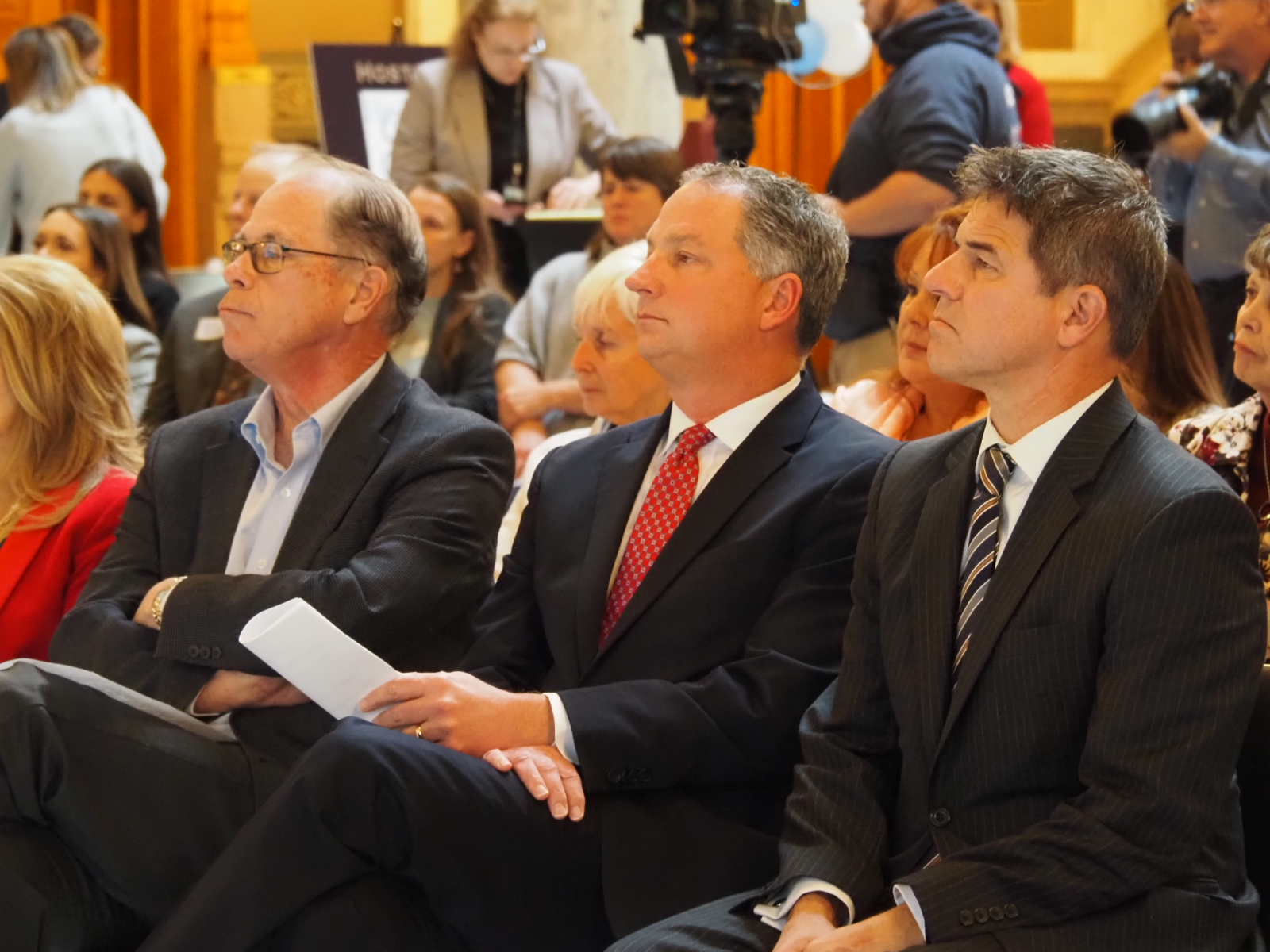
The normally staid hallways of the Indiana Statehouse erupted into political warfare this week as Governor Mike Braun issued his most aggressive ultimatum yet to fellow Republicans who have stonewalled his signature redistricting proposal. Standing before a bank of cameras in the Statehouse rotunda, the first-term governor abandoned the genteel traditions of Hoosier politics and instead brandished the sharp-edged weapons of primary challenges and fundraising retribution against members of his own party. The dramatic escalation marks a stunning reversal for a Republican Party that has dominated Indiana politics for more than a decade, raising questions about whether the GOP's iron grip on state government is finally beginning to crack under the weight of internal divisions.
Braun's threat carries particular weight because it targets the very foundation of political survival for state legislators - their ability to win re-election in carefully crafted districts that favor their party. The governor's proposal would redraw Indiana's nine congressional districts in ways that would create more competitive races, potentially endangering Republican dominance in several districts that have been safely GOP for decades. For the state senators blocking the plan, the issue isn't just about maintaining Republican advantage - it's about protecting themselves from primary challenges by even more conservative candidates who could emerge if the districts become more competitive. This fundamental tension between democratic representation and partisan self-preservation has transformed what should be a routine political process into a existential battle for control of Indiana's future.
The roots of this conflict stretch back to the 2020 census, when Indiana's population shifts revealed stark disparities in congressional district sizes that raised constitutional questions about equal representation. While most states tackled redistricting immediately after receiving census data, Indiana's Republican leadership delayed action, creating a vacuum that allowed competing factions within the party to develop vastly different visions for the state's political future. Braun, a political outsider who built his fortune in the automotive distribution business, campaigned on a promise to break the grip of career politicians and institute reforms that would make government more responsive to voters. His redistricting proposal represents the most significant test of that promise, pitting him against veteran lawmakers who have spent decades carefully constructing the current system that protects incumbents of both parties.
The governor's plan would fundamentally alter the political calculus for Indiana's congressional delegation by creating three districts that would be genuinely competitive in general elections, compared to the current system where only one district regularly features competitive races. This change would force Indiana's representatives to appeal to a broader spectrum of voters rather than simply catering to the most partisan elements of their base during primary elections. Political scientists have long argued that such competitive districts produce more moderate representatives who are better able to work across party lines in Washington, but the proposal faces fierce resistance from Republicans who fear losing their stranglehold on Indiana's congressional delegation. The debate highlights the uncomfortable truth that both parties often prioritize maintaining power over creating a more representative democracy.
The state senators blocking Braun's proposal have developed their own alternative map that would make only minimal changes to existing districts, preserving the Republican advantage while addressing the most egregious examples of population imbalance. Their plan would maintain the current system where seven of Indiana's nine congressional districts heavily favor Republican candidates, ensuring that the GOP retains its dominance even if Democrats make significant gains in statewide elections. This approach reflects the careful political calculations that state legislators must make when balancing the demands of their party's base against the broader principles of democratic representation that they publicly espouse.
Braun's threat to primary the recalcitrant senators represents a nuclear option in Indiana politics, where primary challenges have historically been rare and usually unsuccessful against entrenched incumbents. The governor's political operation has already begun conducting polling and opposition research on several key state senators, preparing the groundwork for what could become the most expensive and divisive primary elections in state history. His allies have quietly reached out to potential primary challengers, including local business leaders and conservative activists who have grown frustrated with what they see as the legislature's failure to embrace meaningful reforms. The governor's personal fortune, estimated at more than $50 million, provides him with the financial resources to wage war against his own party in ways that previous Indiana governors could only imagine.
The stakes extend far beyond Indiana's borders, as the redistricting battle could influence which party controls the U.S. House of Representatives after the 2026 midterm elections. Indiana's current map produces seven reliably Republican seats and one reliably Democratic seat, with only one district that regularly switches between the parties. If Braun's proposal creates three competitive districts, Democrats could potentially gain two to three additional seats in Indiana alone, significantly impacting the national political landscape. This potential shift has attracted attention from national party committees and outside groups that are preparing to pour millions of dollars into Indiana's primary and general elections, transforming the state into an unexpected battleground for control of Congress.
The conflict has also exposed deep divisions within Indiana's Republican Party between establishment figures who prioritize maintaining power and populist reformers who embrace Braun's more confrontational approach. These tensions reflect similar battles playing out in Republican parties across the nation, where traditional conservatives increasingly find themselves at odds with Trump-style populists who prioritize fighting political corruption over maintaining traditional power structures. Indiana's version of this conflict carries particular weight because Republicans have controlled the governor's mansion and both houses of the legislature since 2011, giving them complete control over the redistricting process that determines political power for the following decade.
Political observers note that Braun's aggressive stance represents a significant departure from his predecessors, who typically avoided direct confrontation with members of their own party and instead relied on behind-the-scenes negotiations to advance their agendas. Governor Eric Holcomb, Braun's immediate predecessor, rarely clashed publicly with Republican legislators and instead built consensus through quiet negotiations and careful attention to the concerns of individual lawmakers. Braun's more confrontational approach reflects both his background as a business executive accustomed to getting his way and his political calculation that voters are hungry for leaders who will fight to break the grip of career politicians on state government.
The redistricting battle has also highlighted the complex relationship between state and national politics in an era of increasing polarization. Indiana's Republican senators who oppose Braun's plan have received support from national conservative organizations that argue competitive districts would lead to the election of more moderate Republicans who might be willing to work with Democrats on key issues. These groups prefer a system that ensures the election of reliably conservative representatives who will resist compromise with Democrats, even if that means maintaining districts that stretch the bounds of geographic logic and democratic representation.
Democratic leaders in Indiana have watched the Republican civil war with a mixture of satisfaction and concern, recognizing that while the GOP infighting creates opportunities for Democratic gains, the party remains deeply disadvantaged in most of the state's congressional districts. Democratic Party Chairman has called on Braun to work with Democratic legislators to pass a truly nonpartisan redistricting plan, arguing that such an approach would create competitive districts without the appearance of partisan manipulation. However, Republicans have shown little interest in working with Democrats on the issue, preferring to resolve their internal conflicts without giving the opposition party any influence over the process.
The business community in Indiana has largely remained on the sidelines of the redistricting battle, though some corporate leaders have privately expressed concern that the political instability could harm the state's reputation for predictable, business-friendly governance. Indiana has traditionally prided itself on avoiding the kind of partisan warfare that has paralyzed state governments in neighboring Illinois and Ohio, and business leaders worry that Braun's aggressive approach could signal a shift toward more polarized politics that might discourage investment. The Indiana Chamber of Commerce has called for a compromise solution that addresses population imbalances while maintaining the state's reputation for political stability.
The legal implications of the redistricting battle could extend for years, as whichever side loses the political fight is likely to challenge the outcome in court. Voting rights groups have already begun preparing lawsuits that could force the state to redraw congressional districts if they believe the final product violates constitutional principles of equal representation. The U.S. Supreme Court's ruling in Rucho v. Common Cause made it more difficult to challenge partisan gerrymandering in federal court, but state courts in Pennsylvania, North Carolina, and other states have struck down heavily partisan maps under state constitutional provisions. Indiana's constitution contains similar provisions that could provide grounds for legal challenges if the final redistricting plan appears too partisan.
The timing of Braun's threat carries particular significance because candidate filing deadlines for the 2026 primary elections are rapidly approaching, giving potential challengers only a few months to organize campaigns against incumbent senators. The governor's allies have indicated that they expect primary challenges in at least four Senate districts where incumbent Republicans have opposed the redistricting proposal, potentially creating expensive and divisive battles that could drain resources from the general election campaign. The targeted senators represent different regions of the state, suggesting that Braun's operation is preparing a broad-based assault rather than targeting only the most vulnerable incumbents.
The redistricting battle has also sparked renewed debate about the role of direct democracy in Indiana's political system, with some reformers calling for a ballot initiative process that would allow citizens to bypass the legislature and implement redistricting reforms directly. Indiana is one of only a handful of states that does not provide for citizen-initiated ballot measures, forcing reform advocates to work through the legislature where their proposals face opposition from incumbents who benefit from the current system. Braun has expressed support for allowing ballot initiatives, though his proposal would require a constitutional amendment that would need legislative approval and voter ratification, creating a circular problem where the very lawmakers who benefit from gerrymandering would need to approve reforms that could endanger their own positions.
The governor's aggressive stance has also raised questions about his own political future, with speculation that he might be positioning himself for a U.S. Senate run in 2028 or even a presidential bid in 2028. By taking on his own party's establishment, Braun is building a national profile as a reformer willing to challenge entrenched interests, an image that could appeal to voters frustrated with political gridlock in Washington. However, if his redistricting push fails and he alienates key Republican constituencies in Indiana, his political career could suffer significant damage that might end his ambitions for higher office.
The ultimate resolution of Indiana's redistricting battle will have implications that extend far beyond the state's borders, potentially influencing how other states approach the once-a-decade process of redrawing political boundaries. If Braun succeeds in forcing competitive districts through primary threats, other governors might adopt similar tactics in states where one party dominates the political landscape. Conversely, if the establishment Republicans succeed in blocking significant changes, it would represent a victory for traditional political power structures and a setback for reform advocates who argue that gerrymandering has made American democracy less responsive to voters.
As the battle continues to unfold, Indiana residents are finding themselves caught in the middle of a political war that could determine the state's political direction for the next decade. Polls show that most voters support competitive districts in principle but have mixed feelings about the aggressive tactics being employed by both sides in the current battle. The outcome will ultimately depend on whether Braun can successfully mobilize public support for his reform agenda while convincing enough Republican legislators that supporting competitive districts is in their own political self-interest. With candidate filing deadlines approaching and primary challenges already taking shape, the next few months promise to bring even more drama to a political process that has already shattered the normally placid traditions of Hoosier politics.
Categories:



Please log in to leave a comment.
Comments 0
Loading comments...
No comments yet. Be the first to comment!