

- BYEmmanuel Badmus - 20 Nov, 2025
- 9 Mins Read
- 15 views



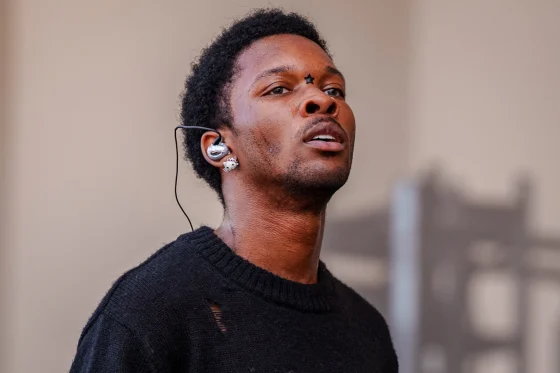
Eighteen-year-old David Burke—known to millions of streaming listeners as the honey-voiced R&B phenom D4vd—woke up last Tuesday thinking about chord progressions, TikTok promos, and the upcoming Austin City Limits after-party that might land him a late-night TV slot. By sunset, his name was ricocheting across police scanners, trending hashtags, and courthouse corridors after a 17-year-old girl was found unresponsive in the backseat of his pearl-white Tesla Model 3, parked beneath a flickering streetlamp on a quiet residential block in Houston’s Third Ward.
According to homicide detectives familiar with the case, a neighbor out walking his dog noticed the car’s dome light glowing for more than two hours, the windows fogged, and a faint cellphone ringtone echoing inside. When first responders arrived at 9:42 p.m., they discovered the teen—later identified by family attorneys as high-school cheerleader and visual-arts honors student Jasmine “Jazz” Flores—lying across custom vegan-leather seats, her phone still clutched in her left hand and a half-eaten pack of watermelon-flavored gummies on the center console. Paramedics pronounced her dead at the scene, and within minutes investigators cordoned off the block, marking the beginning of a celebrity-laced tragedy that has already generated oceans of speculation, digital outrage, and soul-searching about young fame in the influencer era.

D4vd, who rocketed from SoundCloud anonymity to a Billboard-charting single in under twelve months, had reportedly met Flores through mutual friends at a Houston studio session last spring. Friends say the two frequently FaceTimed about anime, manga sketches, and the possibility of her directing his next lo-fi video. On the night in question, surveillance footage reviewed by ABC’s affiliate shows the singer opening the driver-side door at 7:11 p.m., walking into a nearby recording complex, and not returning for roughly two and a half hours—an interval that, according to a timeline released by Houston Police Department’s juvenile division, overlaps the medical examiner’s preliminary estimate of the time of death.
By dawn Wednesday, the normally tranquil cul-de-sac looked like a film set: forensics vans, satellite trucks, and dozens of camera operators jostling for position while a steady stream of fans—many clutching handmade condolence cards—stood vigil behind yellow tape. “We came because his songs got us through the pandemic,” said 19-year-old Marisol Peña, tears streaking her glitter eyeliner. “Now we need to know if our idol is capable of something this monstrous.” Their angst is shared by legal analysts who note that, although detectives have not filed charges, Texas state law allows a suspect to be named “a person of interest” if probable cause emerges during initial interviews. In D4vd’s case, sources inside the department confirm that detectives seized his iPhone, a bright-orange Nike duffel, and the Tesla’s entire data recorder, which logs cabin temperature, seat-occupancy sensors, and even the number of times the falcon-wing doors were opened.
Criminal-defense attorney Melinda Cárdenas—who represented rap star Travis Scott during the Astroworld litigation—says Tesla’s onboard system is a double-edged sword in court. “Prosecutors will argue the digital fingerprint proves opportunity, while the defense will claim the car’s sophisticated child-safety locks and climate controls show he tried to protect the victim,” she told reporters. Either way, the singer’s fate may hinge on toxicology results expected within six weeks. Early rumors suggested fentanyl-laced vape cartridges, but HPD Lieutenant Orlando Martinez cautioned against “armchair pharmacology,” stressing that conclusive findings must wait for lab work from the Harris County Institute of Forensic Sciences.
Music-industry insiders fear the scandal could derail a career that seemed poised to mint Gen-Z gold. D4vd’s breakout ballad “Here With Me” has already soundtracked nearly three billion TikTok clips, and Spotify play counts exceed 900 million. Last month, Capitol Records executives quietly green-lit a deluxe EP featuring Latin-pop icon Rels B and production by Grammy winner Frank Dukes, scheduled for mastering in Los Angeles next Friday. Label representatives declined to comment on whether sessions will proceed, though a source inside Capitol’s New York offices admitted that marketing teams have shifted into damage-control mode, scrubbing billboards and pausing playlist pitching until “the legal fog lifts.” Stock analysts also took notice; parent-company Universal Music Group saw its share price dip 1.9 percent in European trading as investors priced in the possibility of canceled festivals and lost sponsorships from fashion labels such as PacSun and Converse.
Yet the tragedy also ignited wider conversations about how quickly society rushes to judgment when a celebrity is peripherally linked to calamity. Social-psychology professor Dr. Lena Whitaker at Rice University points to a cognitive bias called “illusory correlation,” where people overestimate the relationship between fame and deviance. “We hold stars to higher moral standards, so when something goes wrong, the public fills evidentiary gaps with narrative shortcuts,” she explained. Within hours, Twitter threads branded D4vd a “predator,” while others created #JusticeForJazz hashtags demanding immediate incarceration. Dr. Whitaker warns that such digital tribunals can bias witness testimony and complicate jury selection if charges are eventually filed.
Meanwhile, Jasmine Flores’s family struggles to grieve amid the media circus. In a brief statement released by their attorney, relatives described the teen as “an old soul who painted galaxies on thrifted denim and dreamed of studying animation at CalArts.” They asked for privacy, but also for accountability, whatever the truth may be. A GoFundMe campaign launched by classmates surpassed its $40,000 goal in less than 24 hours, underscoring the community’s anguish. Mourners have covered the chain-link fence near the scene with sunflowers, LED candles, and hand-written notes: “You made us laugh in fourth-period art—fly high, Jazz.”
Police affidavits reveal that Flores had sneaked out of her family’s townhouse after telling her mother she was heading to a study group. Instead, she ordered an Uber that dropped her at the recording studio where D4vd was laying down reference vocals for an unreleased track titled “Until Tomorrow.” Studio manager Carlos Ortega remembers the pair sharing spicy ramen from a vending machine and debating whether Studio Ghibli or Demon Slayer boasted better cinematography. Ortega insists the atmosphere was “chill, creative, nothing erratic,” but he admits he stepped out around 7:00 p.m. to grab nicotine pouches, leaving the two alone with an engineer who wore noise-canceling headphones. When he returned 40 minutes later, the singer’s Tesla was gone. That unaccounted window could prove pivotal if prosecutors argue that the artist had ample opportunity to administer a lethal substance or tamper with evidence.
The case also exposes the precarious intersection of teen autonomy and adult privilege in the influencer economy. D4vd, though barely a legal adult, already travels with a small entourage, access to prescription cough syrup promethazine, and a medical-marijuana card valid in California but not in Texas. Defense lawyers are expected to argue that any controlled substances found in Jasmine’s bloodstream were self-ingested, a theory that could shift culpability away from the singer unless prosecutors prove he knowingly furnished them. Texas statutes on drug-delivery resulting in death carry sentences of up to life imprisonment, but convictions require evidence of direct transfer—something detectives have yet to establish publicly.
Public-relations strategist Vanessa De La Cruz, whose crisis firm has guided celebrities from Chris Brown to Tory Lanez, says D4vd’s team must balance empathy with legal caution. “The worst thing he could do right now is issue a melodramatic Instagram apology that could be construed as an admission,” she noted. Instead, she predicts they will choreograph a carefully worded statement once autopsy results are released, possibly accompanied by a charitable donation to a teen-meditation nonprofit in Jasmine’s name. That approach might rehabilitate his brand without exposing him to cross-examination fodder.
Music historian and author Nelson George views the episode as the latest cautionary tale about the velocity of modern stardom. “When Motown artists broke out in the ’60s, Berry Gordy groomed them for years; now a kid can post a looped beat in his bedroom and be world-famous within months,” George observed. That speed compresses the learning curve for handling fame, money, and adult responsibilities, sometimes with tragic consequences. George argues that labels must pair young signees with wellness teams—therapists, financial advisors, legal guardians—rather than simply handing them advances and algorithmic playlist spots.
Local activists, meanwhile, see systemic inequities in the way police handle cases involving Black and brown teens. Community organizer Dominique Alexander of Houston-based group Change Houston notes that when white teens die under suspicious circumstances, detectives often receive extra resources. “We’re not asking for special treatment; we want equal scrutiny and transparency,” Alexander said at a candlelight vigil Thursday. Data from the Texas Justice Initiative shows that of 127 juvenile homicide probes opened statewide last year, only 38 percent led to charges within six months, with clearance rates lowest in majority-minority zip codes like the one where Jasmine lived.
As night fell on Houston, D4vd remained secluded inside a relatives’ home in Sugar Land, a suburb southwest of the city, while process servers and paparazzi staked out the driveway. Neighbors report that a black Cadillac Escalade with tinted windows periodically shuttles attorneys and what appear to be music-label executives under the cover of pre-dawn darkness. Meanwhile, Tesla engineers reportedly flew in from Palo Alto to extract the car’s encrypted log files, which could reveal whether Jazz opened the door from inside or if someone else activated child-safety overrides. That binary detail might determine whether the singer faces charges or walks away with his career—and conscience—intact.
Whatever the outcome, the tragedy underscores the need for broader conversations about teen safety, celebrity accountability, and the mental-health toll of overnight success. For Jasmine’s family, the waiting is excruciating; for D4vd’s fans, belief hangs in the balance; and for an industry addicted to velocity, the affair offers a sobering reminder that fame’s spotlight can just as quickly become an interrogation lamp.
Categories:


Please log in to leave a comment.
Comments 0
Loading comments...
No comments yet. Be the first to comment!